
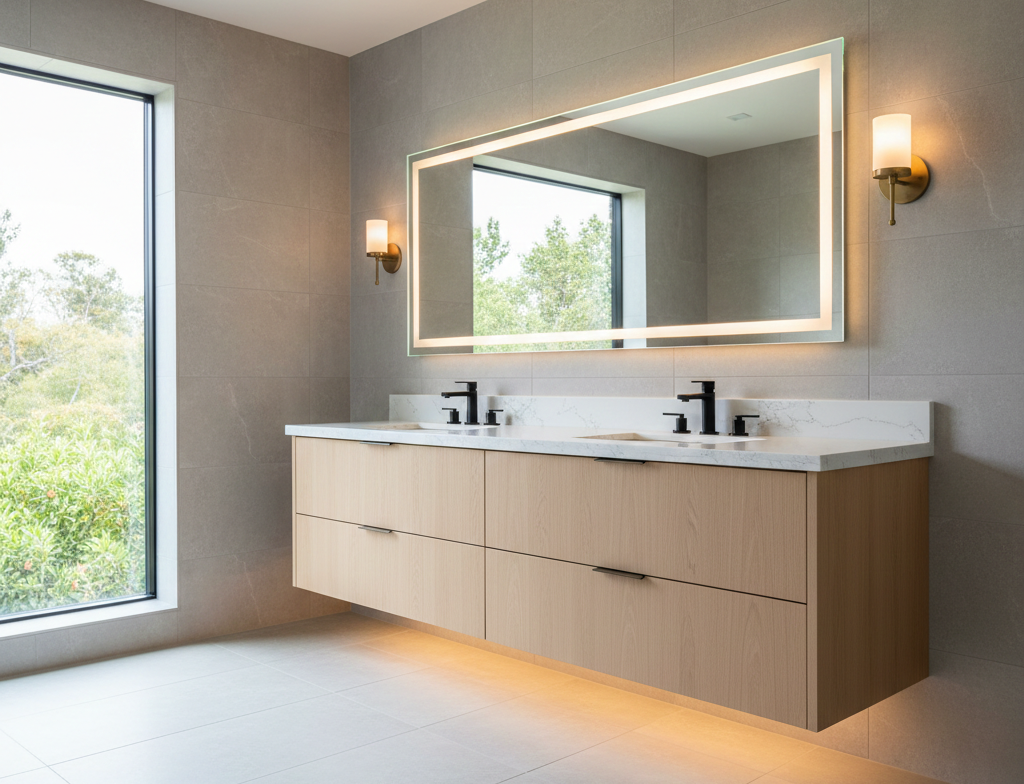

When you walk into a luxury home in the Silicon Valley or the San Francisco peninsula, the primary suite often feels like a high-end boutique hotel. In 2026, the focal point of this transformation is undoubtedly the cabinetry. The latest bathroom vanity ideas have shifted away from the cold, sterile look of the early 2020s toward a more organic, “lived-in” luxury. Homeowners are looking for pieces that offer a tactile experience, combining the warmth of natural wood with the precision of custom craftsmanship. Whether you are planning a full remodel in Saratoga or a quick refresh in Palo Alto, understanding how to balance these textures is the key to an elevated space.
The Bay Area has always been at the forefront of interior innovation, blending tech-forward functionality with timeless aesthetics. Today, that means your storage solutions need to do more than just hold towels. They need to be an architectural statement. We are seeing a massive surge in demand for custom-built units that mirror the quality of other signature home features. For example, many residents are choosing to coordinate their primary bath aesthetic with the cabinetry found in their custom kitchen in San Jose, creating a cohesive design language that flows through the entire floor plan.
The Rise of the Floating Vanity
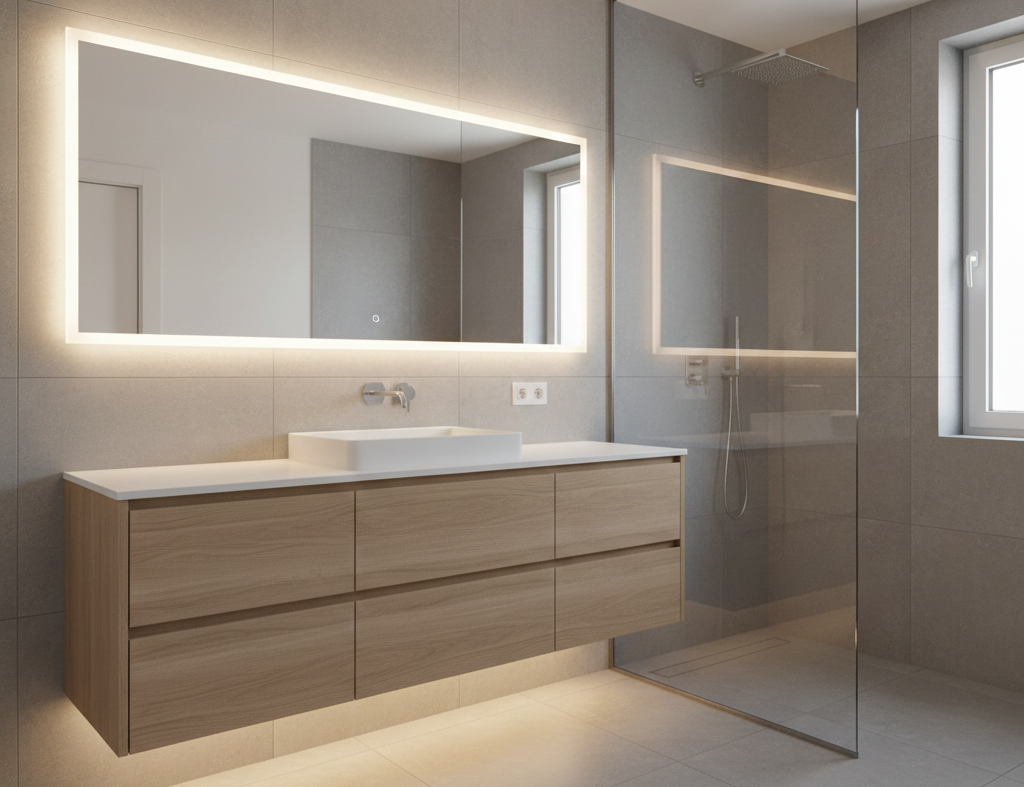
One of the most persistent bathroom vanity ideas for the modern era is the floating, or wall-hung, unit. This design choice is particularly popular in smaller master baths where floor space is at a premium. By lifting the cabinet off the floor, you expose more of your tilework, which instantly makes the room feel larger and more ventilated. In 2026, the “floating” look has evolved. Instead of simple boxes, we are seeing thicker profiles and integrated LED lighting underneath that provides a soft, spa-like glow during the night.
Integrating modern illumination can elevate your bathroom from a simple utility room to a sophisticated architectural showcase. Under-cabinet “toe-kick” lighting is a perfect example, as it provides a functional nightlight and makes your floating vanity appear to truly hover in space. When planning these installations, it is important to ensure your contractor adheres to the newly effective 2025 California Building Standards Code, which became applicable to all permits issued on or after January 1, 2026. You can review the latest structural and safety updates at the California Building Standards Commission portal. This ensures that your high-end bathroom vanity ideas are not only visually stunning but also meet the rigorous electrical and seismic safety requirements that are unique to our region.
The beauty of a floating design is its versatility. You can go for a minimalist Scandinavian look with light white oak or a more dramatic, moody vibe with dark walnut. If you are a fan of organized living, you likely appreciate how these units force a bit of minimalism. Without a “junk drawer” touching the floor, everything feels more intentional. This same philosophy of clean lines and elevated organization is what drives the popularity of a custom closet in San Jose, where every item has its dedicated place, keeping the visual clutter of daily life completely out of sight.
Textured Surfaces and Fluted Details
Texture is the definitive design rule for 2026. If you look at high-end bathroom vanity ideas today, you will notice that flat, glossy surfaces have been replaced by fluted, ribbed, and V-groove panels. This “3D” effect on the cabinet doors catches the light beautifully and adds a layer of sophistication that standard paint simply cannot achieve. It turns a functional piece of furniture into a work of art.
These textures work best when paired with contrasting materials. Imagine a fluted white oak vanity topped with a thick, honed marble slab and brushed brass hardware. The mix of the vertical wood lines and the organic veining of the stone creates a rich, sensory experience. In many Bay Area homes, this focus on texture extends beyond the bathroom. Homeowners often work with a custom wall decor builder in San Jose to create matching accent walls or slatted panels that tie the vanity design into the bedroom’s aesthetic, creating a seamless master retreat.
High-End Materials for 2026
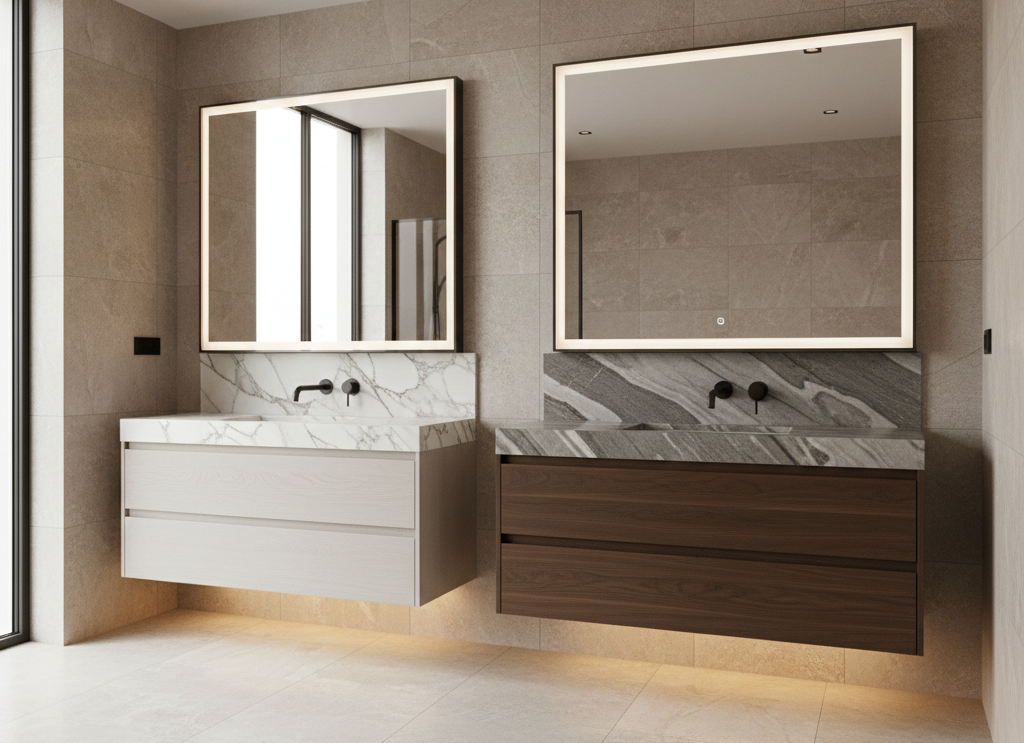
Choosing the right material is the foundation of great bathroom vanity ideas. While MDF and laminates are common in entry-level builds, luxury Bay Area homes prioritize solid hardwoods and high-quality veneers. Oak and walnut remain the top choices because of their durability and the way their grain patterns add natural warmth to a space that can otherwise feel “hard” due to tile and porcelain.
- White Oak: Perfect for the “Japandi” or modern farmhouse look. It offers a neutral, airy feel.
- Walnut: The gold standard for mid-century modern or contemporary luxury. Its deep, rich tones exude elegance.
- Matte Finishes: High-gloss is out. Soft-touch matte finishes are in, as they hide fingerprints and look more refined under layered lighting.
- Natural Stone Slabs: Quartz is still king for durability, but authentic quartzite and marble are making a comeback for those who want a one-of-a-kind statement top.
Integrated Technology and Smart Storage
A modern vanity is no longer just a cabinet with a sink; it is a tech hub. The most sought-after bathroom vanity ideas now include “invisible” technology. Think in-drawer outlets for your hair dryer and electric toothbrush, so you never have to see cords on the counter. We are also seeing mirrors with integrated de-foggers and adjustable color-temperature lighting that can be controlled via a smartphone app.
Storage has also become more surgical. Instead of one large, dark cabinet under the sink where things get lost, we use U-shaped drawers that wrap around the plumbing. This maximizes every square inch of available space. Deep drawers with built-in organizers for skincare, makeup, and grooming tools ensure that your morning routine is as efficient as it is luxurious. In the Bay Area, where the pace of life is fast, having a vanity that simplifies your day is a true luxury.
Color Palettes: Beyond Basic White
While white will always be a safe choice, the bathroom vanity ideas trending for 2026 are much more colorful. Sage green, dusty terracotta, and deep navy are appearing in some of the most beautiful homes in the region. These “new neutrals” provide a sense of calm and connection to nature, which is a major theme in biophilic design.
If you aren’t ready to commit to a bold color, consider a two-tone approach. A wood-stained lower cabinet with a soft, mushroom-colored upper medicine cabinet can add depth without being overwhelming. The goal is to create a space that feels personal and curated, rather than a carbon copy of a showroom floor. This shift toward personalized, soulful spaces is a hallmark of high-end California living.
Sizing and Proportions
The scale of your vanity can make or break the room’s flow. For master suites, the double-sink vanity remains the standard, but the 2026 trend is to give each person more breathing room. Instead of one continuous cabinet, some designers are opting for two separate “his and hers” floating units with a small makeup station or a linen tower in between. This asymmetrical look feels modern and tailored.
In guest baths or powder rooms, the bathroom vanity ideas lean toward more sculptural, furniture-style pieces. A single, chunky timber slab with a vessel sink can be a showstopper in a smaller space. Because these rooms are smaller, you can afford to take bigger risks with expensive materials like rare stones or hand-carved wood details that would be cost-prohibitive in a larger master bath.
Lighting as Jewelry
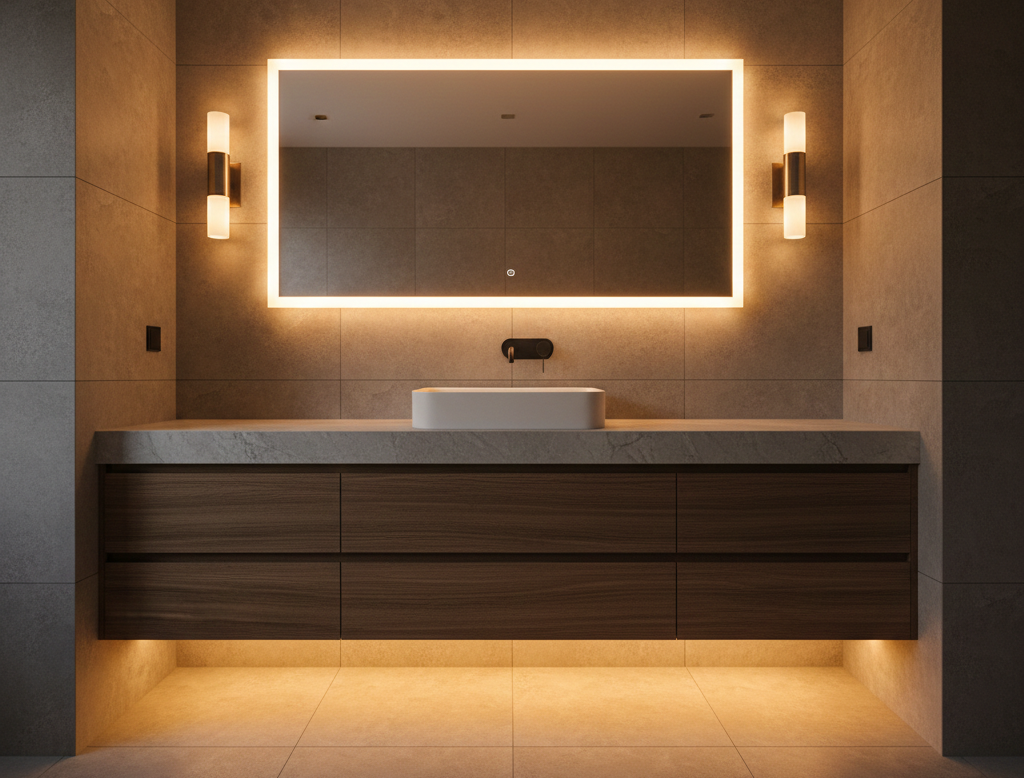
No list of bathroom vanity ideas is complete without mentioning lighting. In 2026, we are moving away from the “big bar of lights” above the mirror. Instead, the trend is toward layered, atmospheric lighting. Sconces mounted directly onto the mirror glass or flanking the sides provide the best task lighting for your face while adding a touch of glamour.
Under-cabinet “toe-kick” lighting is also a must-have. It acts as a perfect nightlight and makes your floating vanity appear to truly hover in space. When you combine this with a backlit mirror, the entire vanity area becomes a focal point that draws the eye the moment you enter the room. This focus on “vibe” and atmosphere is what separates a standard bathroom from a high-end sanctuary.
Sustainability and Craftsmanship
Modern Bay Area homeowners are increasingly concerned with the “where” and “how” of their furniture. This has led to a revival in local craftsmanship. Custom-built vanities are preferred over mass-produced imports because they allow for better quality control and the use of eco-friendly, low-VOC finishes.
When you choose a custom-made vanity, you are getting a piece that is engineered specifically for your home’s unique dimensions and your family’s specific needs. It’s an investment in longevity. A well-crafted wood vanity won’t just look good today; it will age beautifully, developing a patina and character that synthetic materials simply cannot replicate. This commitment to quality and local artistry is what defines the luxury market in 2026.
FAQs
What is the best material for a bathroom vanity in a high-humidity area?
Solid hardwoods like white oak and walnut are excellent if they are sealed correctly. However, for the highest moisture resistance, many homeowners choose marine-grade plywood with high-end wood veneers or moisture-resistant engineered wood (MDF) with a high-quality lacquer finish.
Are floating vanities sturdy enough for heavy stone tops?
Yes, as long as they are installed correctly with proper “blocking” inside the wall. A professional installer will ensure the vanity is anchored to the wall studs, allowing it to easily support the weight of heavy quartz or marble slabs.
How do I choose between a vessel sink and an undermount sink?
Undermount sinks are better for daily use and cleaning, as you can wipe water directly from the counter into the sink. Vessel sinks are more of a design statement and are ideal for powder rooms or guest baths where you want to create a high-impact visual.
What are the trending hardware finishes for 2026?
Brushed brass, champagne bronze, and polished nickel are the leaders. We are seeing a move away from matte black in favor of these warmer, more reflective metals that add a “jewelry” feel to the cabinetry.
Can I mix wood tones in my bathroom?
Absolutely. Mixing a wood vanity with a different wood tone on a ceiling beam or a window frame can add layers and warmth to the room. The key is to ensure the undertones (warm vs. cool) are compatible.
Conclusion
The evolution of bathroom vanity ideas in 2026 reflects a broader desire for homes that are both highly functional and deeply personal. From the sleek silhouettes of floating units to the rich, tactile appeal of fluted wood, the modern vanity has become the anchor of the luxury bathroom. For those living in the Bay Area, these designs offer a way to bring the serenity of a spa into the comfort of the home. By prioritizing high-end materials, custom craftsmanship, and integrated technology, you can create a space that not only enhances your daily routine but also adds significant long-term value to your property. As you plan your next project, remember that the best designs are those that balance current trends with your own unique sense of style, resulting in a sanctuary that feels timeless, sophisticated, and perfectly you.