
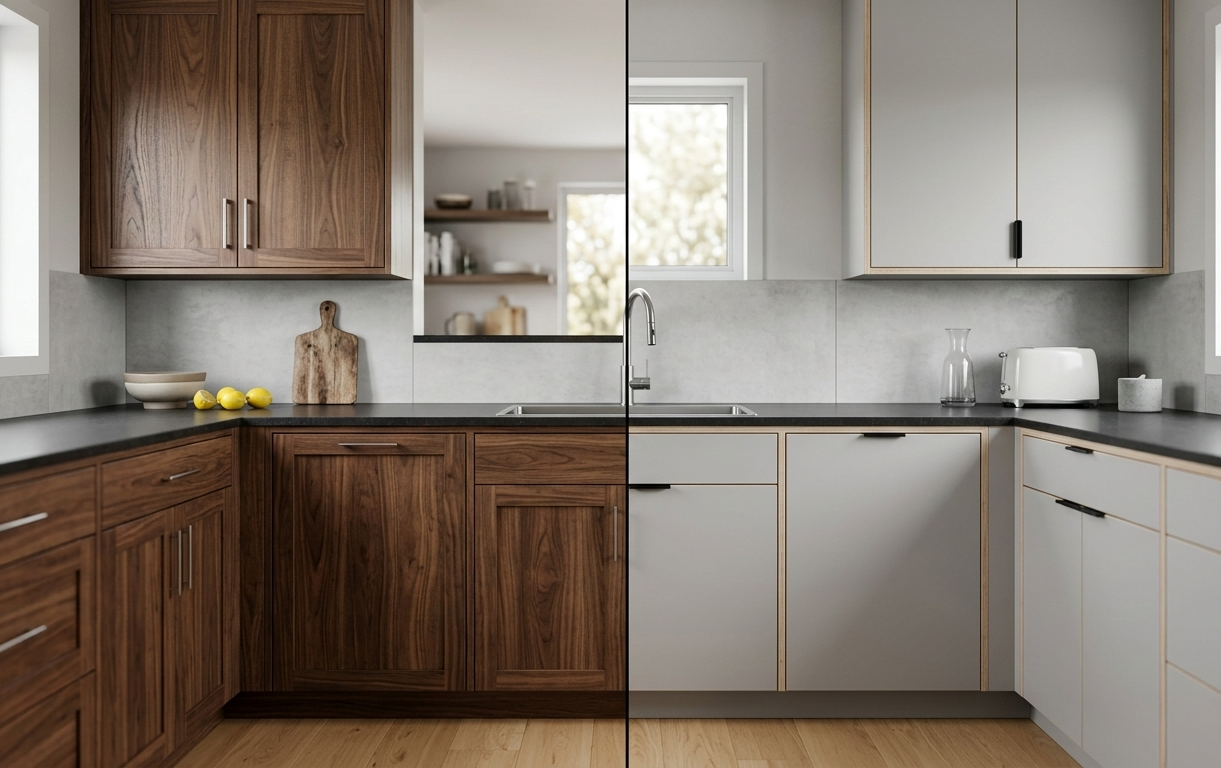

When it comes to a kitchen remodel, the most frequent debate homeowners find themselves in involves the structural integrity of their storage. Choosing between solid wood vs plywood cabinets is a decision that impacts not only the initial visual appeal of your home but also its long-term resale value and daily functionality. In a bustling household, the kitchen is more than just a place to prepare meals; it is a high-traffic zone where surfaces are constantly exposed to heat, moisture, and mechanical wear. Understanding the technical differences between these two materials is the first step toward a successful renovation that stands the test of time.
Many people assume that one material is inherently superior to the other, but the truth is more nuanced. The modern cabinetry industry has evolved, and both options offer specific advantages depending on your local climate, your budget, and your aesthetic goals. As we dive into the details of solid wood vs plywood cabinets, we will look at how each handles the unique stresses of a kitchen environment. From the natural beauty of grain patterns to the engineered stability of cross-laminated layers, each choice brings a different set of characteristics to your cabinetry project.
Understanding the Anatomy of Solid Wood
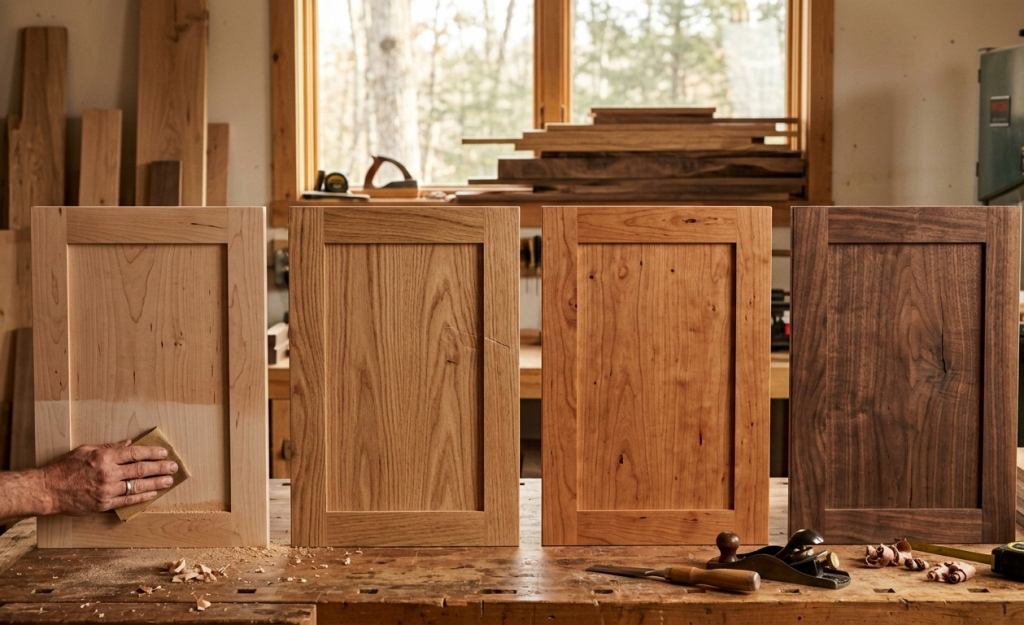
Solid wood is exactly what it sounds like: a single, continuous piece of timber harvested from a tree. For centuries, this has been the gold standard for high-end furniture and home construction. When discussing solid wood vs plywood cabinets, proponents of the solid option often point to its unmatched beauty and the “feel” of real timber. Common species used in modern kitchens include maple, oak, cherry, and walnut, each offering a distinct color profile and hardness level.
The primary benefit of using solid material is its durability in terms of repairability. If a solid door gets scratched or dented, it can be sanded down and refinished multiple times. This makes it a lifetime investment for those who appreciate the aging process of natural materials. However, solid timber is a “living” material. It breathes, expanding and contracting with changes in humidity. In the context of solid wood vs plywood cabinets, this natural movement can sometimes lead to warping or hairline cracks in painted finishes if the wood isn’t properly seasoned or used in a climate-controlled environment.
The Engineering Behind Plywood Cabinets
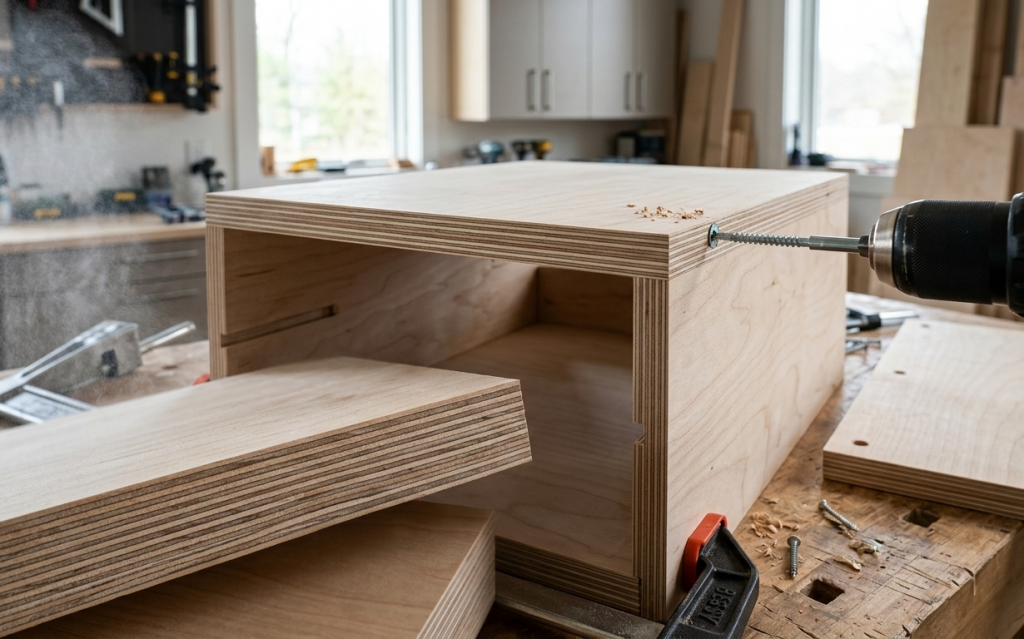
Plywood is an engineered wood product made by gluing together thin layers of wood veneers, known as plies. These layers are stacked with the grain of each layer running perpendicular to the one below it. This cross-graining technique is the secret to its structural performance. When you compare solid wood vs plywood cabinets, you will find that plywood is significantly more resistant to moisture and temperature fluctuations. It does not shrink or swell nearly as much as solid timber, which is why it is often the preferred choice for cabinet boxes and shelving.
High-quality furniture-grade plywood is not the same as the rough sheets you see at a basic construction site. For custom projects, designers often use multi-ply birch or maple plywood, which offers incredible screw-holding power and a very stable flat surface. This stability is crucial for modern kitchen cabinets where sleek lines and perfectly aligned doors are the priority. Plywood allows for larger, seamless panels that remain perfectly flat over decades of use.
Weight and Structural Integrity
In the battle of solid wood vs plywood cabinets, weight is a factor that professional installers take very seriously. Solid wood is heavy and dense, which provides a sense of luxury but also puts more stress on the wall hanging systems. Plywood, while still very strong, offers a better strength-to-weight ratio. This makes plywood cabinets easier to install securely, especially for upper cabinets that must support the weight of heavy stoneware and appliances.
Structural integrity also comes down to how the material holds fasteners like hinges and drawer slides. Solid wood is excellent for this, provided it is a hardwood species. However, low-quality particle boards or MDF (Medium Density Fiberboard) often fails in this area. Plywood bridges the gap by providing a core that grips screws tightly while maintaining its shape. When homeowners weigh their options for solid wood vs plywood cabinets, they often find that a hybrid approach—using solid wood for doors and plywood for boxes—provides the best of both worlds.
Aesthetics and Finish Options
The visual appeal of your kitchen is often the deciding factor in the solid wood vs plywood cabinets debate. Solid wood offers a depth of grain and a natural variation that is impossible to fully replicate. Each door is unique, with its own story told through knots and mineral streaks. This is particularly desirable for rustic, traditional, or transitional kitchen styles where the wood itself is the star of the show.
Plywood, on the other hand, is usually finished with a high-quality veneer on the outside. This allows you to have the look of an exotic wood species at a more controlled price point. For those interested in modern kitchen design, plywood is an excellent canvas for high-gloss laminates or ultra-matte finishes. Because the surface is so stable and flat, it is the perfect substrate for contemporary styles that require a flawless, mirrored finish.
Moisture Resistance in the Kitchen
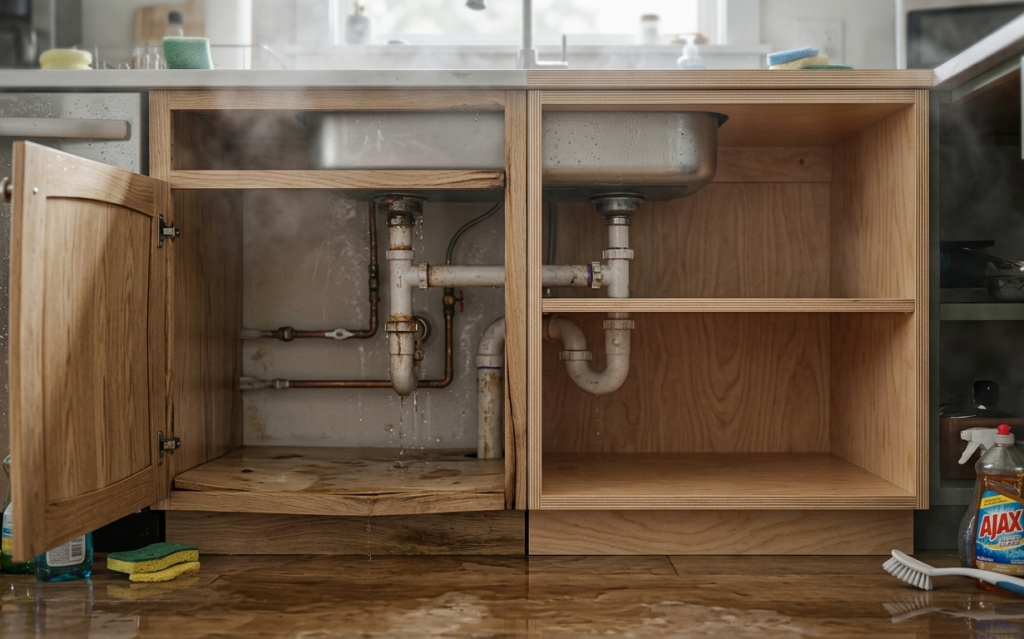
The kitchen is a humid environment. Between the steam from boiling water and the occasional plumbing leak under the sink, your cabinets will inevitably face moisture. This is a critical point in the solid wood vs plywood cabinets discussion. Solid wood can be prone to “cupping” or “bowing” if it gets wet and dries out repeatedly. While high-quality finishes protect the surface, the core remains susceptible to movement.
Plywood is designed to handle these conditions much better. The waterproof glues used in high-end plywood help prevent the layers from separating even in damp conditions. This is why many custom builders recommend plywood for the cabinet box under the kitchen sink. When you look at the longevity of solid wood vs plywood cabinets, plywood often wins in the “hidden” areas of the kitchen where functionality and moisture defense are more important than the outward appearance of the wood grain.
Customization and Versatility
For residents looking for a custom kitchen cabinet in San Jose, versatility is key. Custom builders often prefer working with a mix of materials to achieve the desired result. Solid wood is fantastic for ornate carvings, detailed crown molding, and custom-turned legs. If your dream kitchen involves intricate woodworking and classic craftsmanship, solid wood will be your primary material.
However, plywood is the workhorse of the custom shop for internal organization. It allows for the creation of wide pull-out drawers, spice racks, and pantry dividers that are thin yet incredibly strong. In the broader scope of solid wood vs plywood cabinets, the most successful kitchen projects are those that leverage the strengths of both. By using solid wood for the face frames and door panels and plywood for the interior structure, you get a kitchen that looks expensive but functions with modern efficiency.
Environmental Impact and Sustainability
Sustainability is a growing concern for modern homeowners. When evaluating solid wood vs plywood cabinets, both have environmental footprints to consider. Solid wood is a renewable resource, but it requires the harvesting of mature trees, and there is often more waste during the milling process to avoid knots or defects. Plywood is considered more efficient in terms of timber usage because it uses thin veneers, allowing one log to cover a much larger surface area.
Many high-quality plywood manufacturers now use soy-based, formaldehyde-free glues, making them a safe choice for indoor air quality. When you choose between solid wood vs plywood cabinets, looking for FSC (Forest Stewardship Council) certification ensures that the timber was harvested responsibly. Solid wood is also biodegradable and can be reclaimed or recycled at the end of its life, which appeals to those focusing on a circular economy within their home design.
Cost Comparison and Long-Term Value
There is no getting around the fact that price plays a major role in the solid wood vs plywood cabinets decision. Generally speaking, solid wood cabinets are more expensive due to the cost of raw lumber and the labor-intensive nature of working with natural timber. Every piece must be hand-selected and matched for grain and color, which adds significant time to the production schedule.
Plywood cabinets offer a more predictable cost structure. While “baltic birch” plywood isn’t cheap, it is more readily available and easier to process with CNC machinery. In the long-term assessment of solid wood vs plywood cabinets, you can consult this expert comparison of cabinet materials to see how different grades of wood perform under stress tests for weight, moisture, and daily wear in a typical residential kitchen environment. However, if the solid wood has warped or the joints have separated due to poor maintenance, that value quickly disappears. A well-built plywood kitchen will often look better 20 years down the line than a poorly maintained solid wood one.
Maintenance and Care Requirements
Taking care of your kitchen is a daily task. Solid wood requires a bit more attention to ensure the finish remains intact. You must be careful about using harsh chemicals that could strip the natural oils or damage the protective topcoat. In the solid wood vs plywood cabinets debate, maintenance is often the tie-breaker for busy families. Plywood cabinets with a high-quality laminate or lacquer finish are incredibly easy to wipe down and are more resistant to household cleaners.
It is also important to consider the “joint” areas. Solid wood doors are often built with a “floating panel” to allow for expansion. This creates small crevices where dust and grease can collect. Plywood slab doors are much easier to clean because they are a single, flat surface. Whether you prefer the intricate look of solid wood or the low-maintenance appeal of plywood, your decision should reflect how much time you are willing to spend on kitchen upkeep.
Conclusion
In the end, the choice between solid wood vs plywood cabinets isn’t about finding a “winner,” but about finding the right fit for your home. If you value natural character, the ability to refinish your surfaces, and a traditional feel, solid wood is an excellent investment. If you prioritize structural stability, moisture resistance, and a crisp, modern aesthetic, plywood is likely the better choice for your cabinetry boxes and contemporary doors. Most premium custom kitchens today utilize a hybrid approach, combining a solid wood exterior with a plywood interior to ensure the highest level of performance. By understanding these material differences, you can move forward with your kitchen project confident that your cabinets will provide both beauty and utility for years to come.
Frequently Asked Questions
Is plywood cheaper than solid wood for cabinets?
Generally, yes. Plywood is more cost-effective because it uses timber more efficiently and is easier to manufacture. However, high-grade furniture plywood can sometimes cost as much as mid-range solid hardwoods.
Can plywood cabinets be refinished like solid wood?
Plywood can be sanded and refinished, but you must be extremely careful. The top veneer layer is often very thin. If you sand through that layer, you will hit the glue and the lower plies, which cannot be stained to match.
Which material is better for a high-humidity climate?
Plywood is the superior choice for humid areas. Its cross-laminated structure prevents it from warping or expanding as much as solid wood when the moisture levels in the air change.
Do solid wood cabinets increase home value more?
“Solid wood” is a powerful term in real estate listings. While it can increase the perceived value and prestige of a home, a high-quality plywood kitchen with professional finishes will usually provide an equal return on investment.
Why do some builders use MDF instead of plywood?
MDF is even smoother and flatter than plywood, making it the best choice for painted cabinets. However, it lacks the moisture resistance and screw-holding power of plywood, which is why plywood is generally considered a higher-grade material.
How can I tell if my cabinets are solid wood or plywood?
Look at the edges of the cabinet box or the inside of a drawer. If you see layers like a sandwich, it is plywood. If the grain continues all the way through the piece of wood without any layers, it is solid wood.