
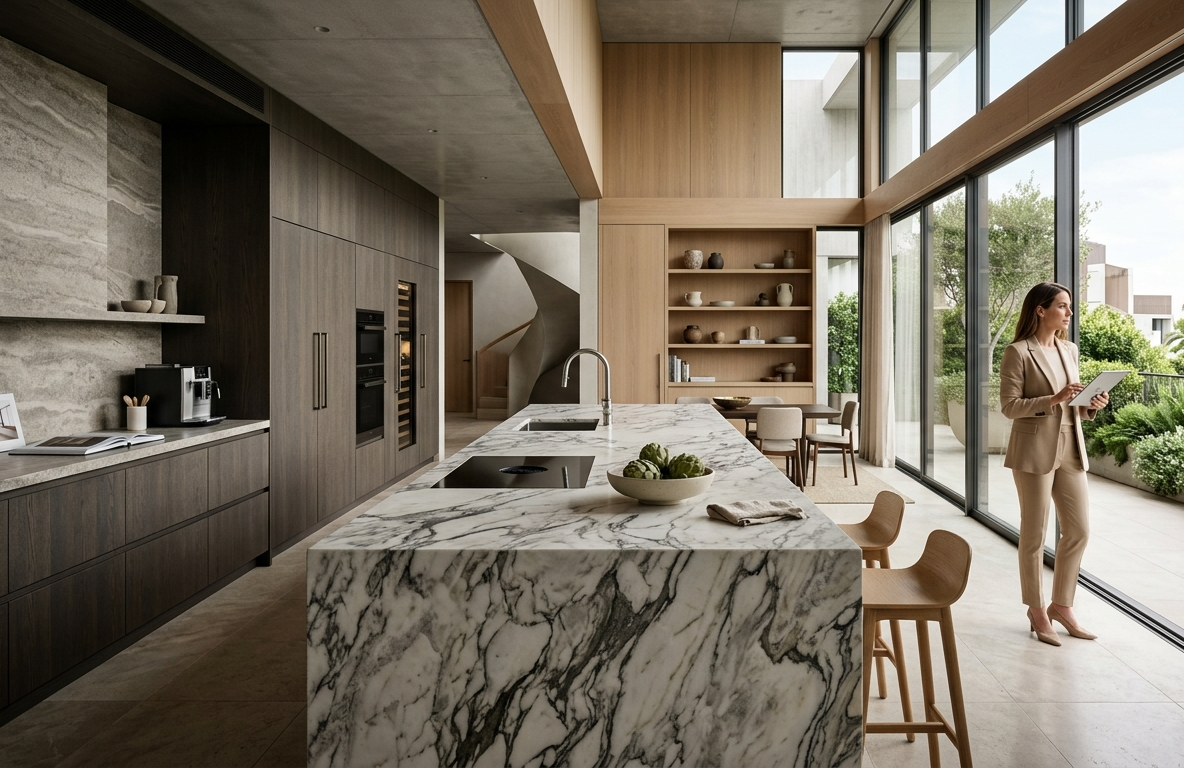

The kitchen has long been considered the heart of the home, but in 2026, it has evolved into something much more significant. It is now a multipurpose sanctuary that combines high-end culinary technology with the warmth of handcrafted artistry. For homeowners in San Jose and beyond, the shift toward personalization has never been stronger. People are moving away from cookie-cutter solutions and embracing the unique possibilities that come with a custom approach. This Bespoke Kitchen Design Guide is created to help you navigate the intricate process of building a kitchen that is not only functional but also a true reflection of your personality and lifestyle.
When you choose a bespoke path, you are choosing a design that fits your home perfectly. There are no filler panels or wasted corners. Every inch of cabinetry is built to the exact dimensions of your space, allowing for a level of precision that stock or semi-custom options simply cannot match. Whether you are an aspiring chef who needs specialized spice storage or a busy parent who requires a hidden breakfast station to keep the morning chaos at bay, a tailored plan ensures that your environment works for you, rather than the other way around.
Defining Your Luxury Kitchen Vision
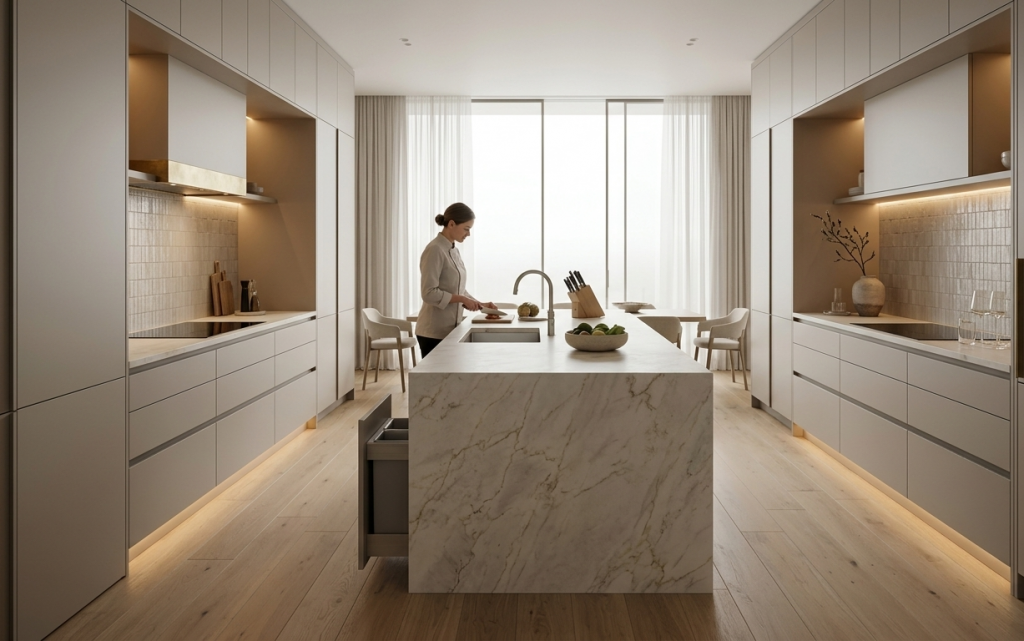
Before the first piece of wood is cut or the first blueprint is drawn, you must define the soul of your space. A luxury kitchen in 2026 is defined by its materials and its flow. Are you drawn to the sleek, minimalist lines of a modern European aesthetic, or do you prefer the timeless, sturdy feel of a traditional English Shaker style? Your vision serves as the North Star for the entire project. This Bespoke Kitchen Design Guide emphasizes that luxury is not just about the price tag; it is about the intentionality behind every choice.
Consider how you move through your current kitchen. Where do you find yourself getting stuck? Where does the clutter tend to pile up? By identifying these pain points early, you can design solutions that eliminate them entirely. Luxury is the absence of friction. In a bespoke environment, the trash pull-out is exactly where you need it, the lighting shifts perfectly from meal prep to dinner parties, and the cabinetry feels like an extension of the architecture itself. Taking the time to visualize these details is what separates a good kitchen from a legendary one.
The Importance of High-Quality Cabinetry
The foundation of any high-end kitchen is the cabinetry. In the Bay Area, where craftsmanship and innovation meet, homeowners are increasingly looking for custom kitchen cabinet in San Jose solutions that prioritize durability and aesthetics. Unlike mass-produced units that rely on staples and glue, bespoke cabinets are built using traditional joinery methods. This ensures that they can withstand the heavy use of a daily kitchen environment for decades.
In 2026, we are seeing a move toward rich, tactile finishes. Warm walnuts, rift-sawn oaks, and even painted finishes in deep forest greens or navy blues are replacing the stark white kitchens of the past. The beauty of a bespoke approach is that you are not limited to a catalog of ten colors. You can choose any species of wood, any stain, and any sheen level. This Bespoke Kitchen Design Guide suggests looking at your cabinetry as a piece of fine furniture. When the doors hang perfectly level and the drawers glide with a silent, soft-close motion, you can feel the quality in every interaction.
Ergonomics and the Modern Workflow
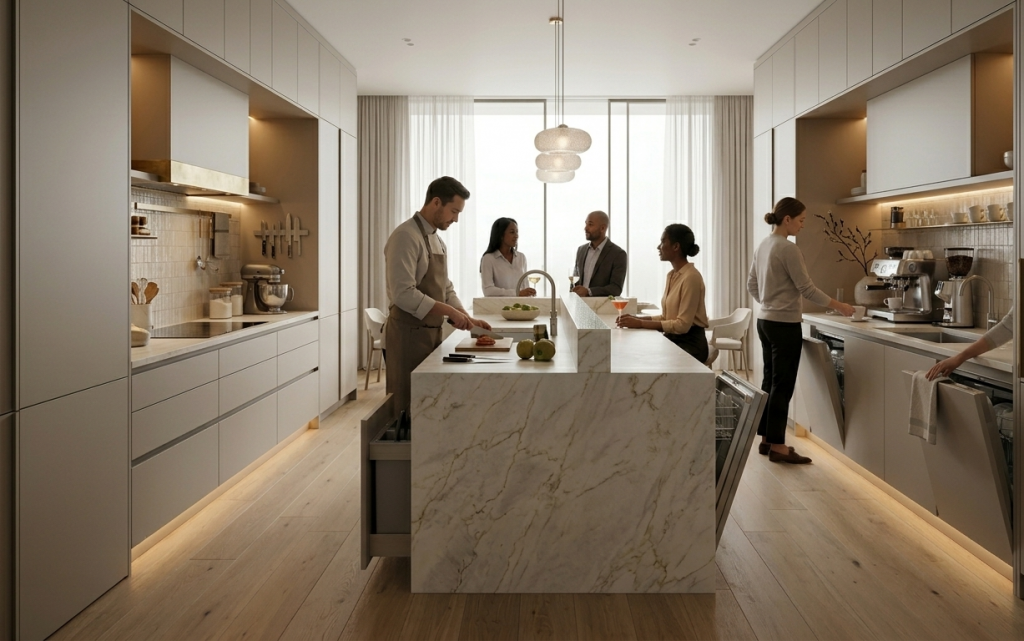
The traditional “kitchen triangle” of the sink, fridge, and stove is still a helpful starting point, but modern kitchen life is more complex. We now think in terms of “zones.” You might have a dedicated baking zone with a marble countertop for rolling dough, a coffee zone with a built-in plumbed espresso machine, and a cleaning zone with dual dishwashers. A comprehensive Bespoke Kitchen Design Guide focuses on how these zones interact to create a seamless experience.
Ergonomics play a vital role here. For example, if you are taller than average, your island can be built slightly higher to prevent back strain during prep work. If you love entertaining, your island can be designed with a “social side” that keeps guests away from the cooking heat while still allowing for conversation. Bespoke design is about making the room fit the human body. When everything is at the right height and within arm’s reach, cooking feels less like a chore and more like a creative outlet. To ensure your layout meets the highest professional benchmarks for safety and efficiency, you can review the official NKBA kitchen planning guidelines for 2026, which detail the latest industry research on lighting quality, work zone accessibility, and integrated wellness technology.
Material Selection: Beyond the Surface
Selecting materials for a bespoke project is an exercise in balancing beauty with performance. For countertops, natural stones like quartzite and Calacatta marble remain top choices for luxury builds due to their unique veining. However, in 2026, we are also seeing an increase in the use of integrated stone sinks and backslashes that continue the countertop material up the wall for a monolithic, high-end look.
The hardware you choose is the jewelry of the kitchen. Solid brass, hand-aged bronze, and even leather-wrapped handles are popular choices that add a layer of texture to the cabinetry. This Bespoke Kitchen Design Guide encourages homeowners to touch and feel materials before committing. The weight of a handle or the coolness of a stone surface contributes to the overall sensory experience of the room. Don’t be afraid to mix materials; a wooden island paired with perimeter cabinets in a matte paint finish can create a sophisticated, layered look that feels curated over time.
Integrating Modern Technology
A luxury kitchen in 2026 is a smart kitchen, but the technology should be felt, not seen. We are moving away from appliances that look like spaceships and toward “integrated” or “paneled” appliances that blend perfectly with the cabinetry. A bespoke fridge or dishwasher should be indistinguishable from a standard cabinet until you open it. This creates a calm, cohesive visual field that allows the craftsmanship of the woodwork to take center stage.
Hidden charging stations, motorized cabinet doors that open with a tap, and voice-controlled lighting are all features that can be incorporated into a Bespoke Kitchen Design Guide. Even specialized appliances like vacuum sealers for sous-vide cooking or built-in steam ovens can be tucked away into custom-built niches. The goal is to have all the power of a professional kitchen without the cluttered look of a commercial one.
The Role of Specialized Storage
One of the greatest joys of a custom kitchen is having a specific place for every item you own. Deep drawers with custom dividers for pots and pans are far superior to low cabinets where you have to crawl on the floor to find a lid. Pull-out larders with solid wood shelving can hold an incredible amount of dry goods while keeping everything visible and accessible.
For many homes, the kitchen serves as the central hub for other activities as well. You might want to incorporate custom home office cabinets near a kitchen nook to create a seamless “command center” for the family. This allows you to manage the household or catch up on emails while staying connected to the heart of the home. A true Bespoke Kitchen Design Guide looks at the rooms adjacent to the kitchen to ensure the cabinetry style flows naturally throughout the entire living space.
Lighting Design: Layering for Atmosphere
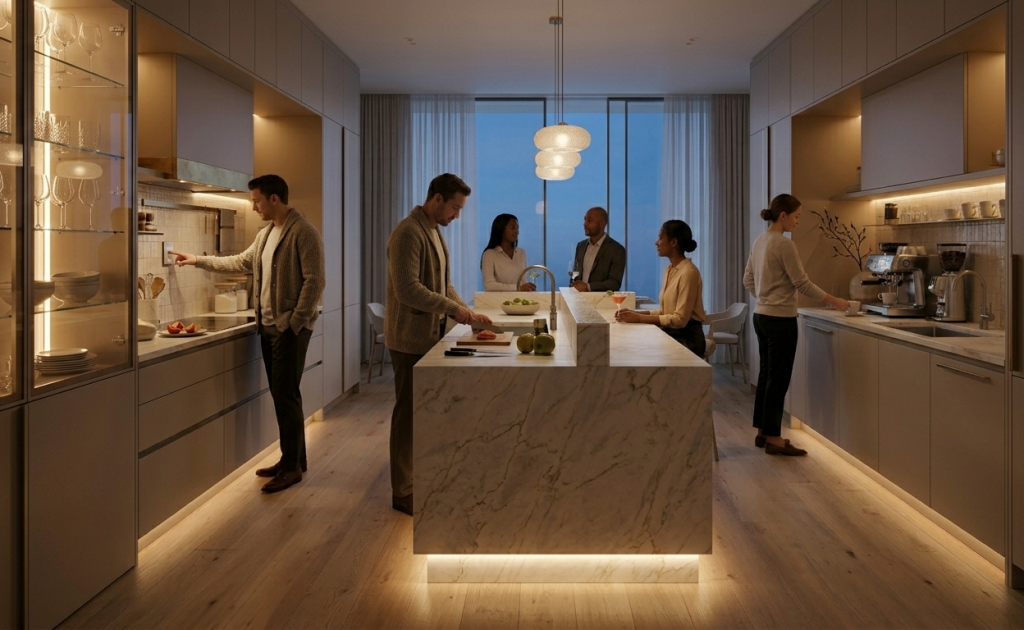
Lighting is often the most underrated element of kitchen planning. In a bespoke project, lighting is integrated into the cabinetry from the beginning. Under-cabinet LEDs provide essential task lighting for chopping and reading recipes, while in-cabinet lighting with glass doors can showcase your favorite glassware or ceramics.
Layering is the key to success. You need overhead architectural lighting for general brightness, task lighting for work areas, and accent lighting to create a mood. Toe-kick lighting is a popular 2026 trend that provides a soft glow for midnight snacks without needing to turn on every light in the house. This Bespoke Kitchen Design Guide recommends using dimmers on every circuit, allowing you to transition the kitchen from a bright, energetic workspace in the morning to a low-lit, intimate lounge area in the evening.
Sustainability and Longevity
In 2026, luxury and sustainability are deeply intertwined. Bespoke design is inherently more sustainable than mass-market options because it is built to last a lifetime. When you invest in quality materials and timeless design, you are moving away from the “disposable” culture of modern interiors. Using responsibly sourced hardwoods and low-VOC finishes ensures that your kitchen is healthy for your family and the planet.
Furthermore, a well-designed bespoke kitchen adds significant value to your property. It is often the first thing buyers look at, and a high-quality, handcrafted kitchen is a powerful selling point. This Bespoke Kitchen Design Guide views the kitchen as a long-term investment. By choosing classic proportions and durable construction, you are creating a space that will look just as beautiful in twenty years as it does today.
Working with a Professional Designer
While it is tempting to try and manage a kitchen remodel yourself, the complexity of a bespoke project usually requires professional expertise. A designer can help you navigate the thousands of decisions involved, from the placement of the electrical outlets to the exact profile of the crown molding. They act as the bridge between your vision and the master woodworkers who will bring it to life.
Collaboration is the heartbeat of a bespoke project. You should look for a team that listens to how you live and offers creative solutions you might not have considered. For example, they might suggest modern kitchen design elements like a hidden pantry door or an integrated herb garden. These small, thoughtful details are what make a kitchen feel truly “bespoke.” A professional designer ensures that the final result is a harmonious blend of style, engineering, and personal expression.
The Journey from Blueprint to Installation
The process of creating a bespoke kitchen is a journey. It begins with detailed measurements and a deep dive into your lifestyle. Once the design is finalized, the manufacturing phase begins. This is where the magic happens, as raw planks of timber are transformed into precision-engineered cabinetry. Unlike stock cabinets that might arrive in a few days, bespoke cabinetry takes time to craft.
The final stage is installation, which is a delicate process that requires expert hands. In a bespoke build, the cabinets are often scribed to the walls and floor to account for any slight imperfections in the building’s structure. This ensures a “built-in” look that is perfectly flush. This Bespoke Kitchen Design Guide reminds homeowners that while the process takes longer than a standard remodel, the result is a one-of-a-kind masterpiece that simply cannot be replicated.
Maintenance and Care for Custom Woodwork
To keep your bespoke kitchen looking its best, proper care is essential. Real wood is a living material that responds to changes in humidity and temperature. High-quality finishes protect the wood, but you should still use mild, non-abrasive cleaners and avoid letting water sit on the surfaces.
Over time, natural wood will develop a beautiful patina that adds to its character. If you ever want to refresh the look, high-quality bespoke cabinets can be sanded and refinished, which is something you cannot do with cheap laminate or thermofoil units. This Bespoke Kitchen Design Guide emphasizes that with just a little bit of regular maintenance, your custom kitchen will remain the stunning center of your home for generations to come.
Conclusion
Creating a bespoke kitchen is an act of love for your home. It is an opportunity to slow down and consider how you want to live, eat, and gather with the people you care about. By following this Bespoke Kitchen Design Guide, you are taking the first steps toward a space that is perfectly calibrated to your needs. From the initial vision to the final installation, every choice you make is a brick in the foundation of your future home life. In 2026, luxury is no longer about showing off; it is about the quiet satisfaction of a home that works perfectly for you. Invest in quality, trust the process, and enjoy the incredible transformation that a truly bespoke kitchen can bring to your life.
Frequently Asked Questions
How much does a bespoke kitchen cost compared to stock cabinets?
A bespoke kitchen is a significant investment and typically costs more upfront than stock or semi-custom options. This is because you are paying for premium materials, expert labor, and a completely unique design. However, when you factor in the longevity and the added home value, many homeowners find the long-term cost to be quite comparable.
How long does the bespoke kitchen process take?
From the initial consultation to the final installation, you should expect the process to take anywhere from four to six months. The design phase usually takes several weeks, followed by the handcrafted manufacturing process. This timeline ensures that every detail is perfect and that the quality of the woodwork meets the highest standards.
Can I choose any wood species for my bespoke cabinets?
Yes, that is one of the primary benefits of bespoke design. While oak, walnut, and maple are the most popular choices, you can work with your designer to source exotic woods or specific cuts like quartersawn or burl wood. The only limit is the availability of the timber and your specific budget.
What is the best way to start my bespoke kitchen project?
The best way to start is by gathering inspiration and making a list of your “must-have” features. Look at magazines, social media, and design blogs to see what styles resonate with you. Once you have a general idea of your vision, contact a professional woodworker or designer to begin the conversation and schedule an initial consultation.
Do bespoke kitchens work in small spaces?
Bespoke design is actually even more beneficial in small spaces. Because the cabinetry is built to the exact dimensions of your room, you can utilize every square inch of space that would be wasted with standard-sized cabinets. A custom approach can make a small kitchen feel much larger and more organized through clever storage solutions.