
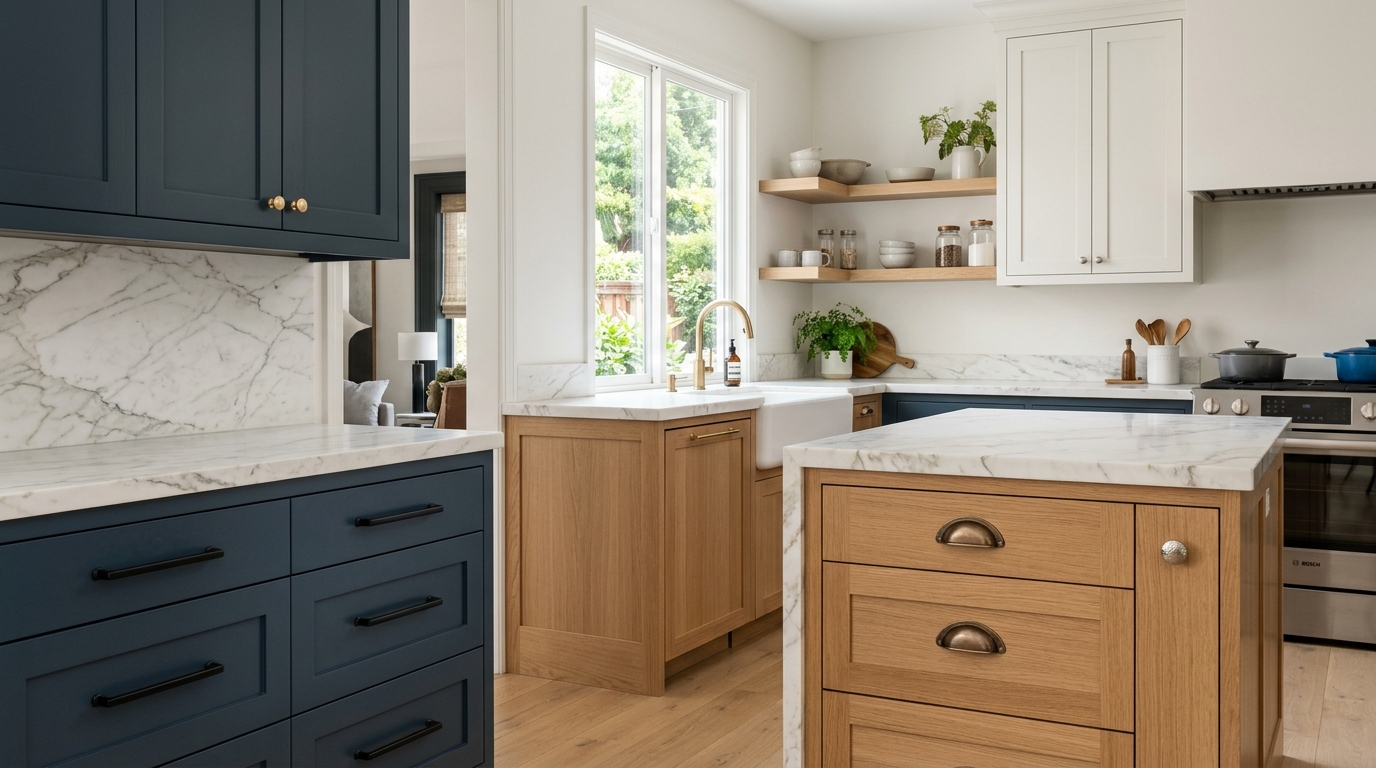

Cabinet hardware is one of the most impactful and most affordable ways to change the look and feel of your kitchen. The right knobs and pulls can make custom cabinets look even more polished. The wrong ones can undermine an otherwise beautiful design. Yet hardware is often chosen last, in a rush, when renovation fatigue has already set in.
This guide is here to help you choose cabinet hardware with confidence. At Alfa Woodworks, we guide every client through hardware selection as part of the cabinet design process, because we know how much it matters. Whether you’re building a new kitchen in San Jose or refreshing existing cabinets in Santa Clara, here’s everything you need to know.
Knobs vs. Pulls: What’s the Difference and When to Use Each
The most basic hardware decision is choosing between knobs and pulls, or a combination of both.
Knobs are single-point hardware pieces. They’re typically round (though square, oval, and novelty shapes exist). Knobs work well on cabinet doors because they’re visually simple and don’t take up much space. They’re harder to use on drawers, especially wide drawers, because they’re only grabbed at one point.
Pulls (also called handles or bar pulls) are two-point hardware pieces mounted at each end. They’re much better for drawers because they distribute the pulling force across a wider span. Long bar pulls on wide drawers are one of the most popular hardware choices in modern Bay Area kitchens.
Common approach: Use knobs on doors and pulls on drawers. This is the most traditional and widely used configuration.
Modern approach: Use only long bar pulls on both doors and drawers. This creates a consistent, sleek look that’s popular in contemporary kitchens.
Cabinet Hardware Finishes: Which Is Right for Your Kitchen?
Finish is the most visually impactful hardware decision you’ll make. Here’s a breakdown of the most popular options:
Brushed Nickel
The most universally popular finish for the past two decades. Brushed nickel is neutral, durable, and complements virtually any cabinet color. It resists fingerprints better than polished nickel.
Best with: White, off-white, grey, or blue cabinets
Matte Black
The boldest and most contemporary hardware finish. Matte black creates sharp contrast against light-colored cabinets and looks very intentional. It shows fingerprints less than you’d expect because the matte texture diffuses light.
Best with: White, sage green, navy, or two-tone cabinets
Brushed Brass / Satin Brass
Warm, sophisticated, and luxurious without looking too flashy. Brushed brass has surged in popularity in the past several years and is now one of the top choices in high-end kitchens.
Best with: White, cream, warm wood tones, and forest green cabinets
Oil-Rubbed Bronze
Darker and more rustic than brushed bronze. Oil-rubbed bronze has an antiqued appearance that works beautifully in traditional and farmhouse kitchens.
Best with: Cream, off-white, stained wood, and warm-toned cabinets
Polished Chrome
Bright, reflective, and classic. Chrome is clean and modern, though it shows water spots and fingerprints more readily than brushed finishes.
Best with: White or grey cabinets in contemporary kitchens
Copper
Warm and distinctive. Copper hardware is less common but makes a strong design statement. It develops a patina over time, giving it a living, organic quality.
Best with: Warm wood tones, cream, and earthy cabinet colors
Sizing Your Cabinet Hardware Correctly
Getting the size right is critical. Hardware that’s too small looks insignificant. Hardware that’s too large overwhelms the cabinet door.
For cabinet doors:
- A standard knob for a cabinet door is typically 1–1.5 inches in diameter
- A cup pull for a door is usually 3–4 inches wide
- A bar pull for a door is usually 3–5 inches long (measured between screw holes)
For drawers:
- Narrow drawers (12 inches or less): 3–4 inch pulls
- Standard drawers (12–24 inches): 3–5 inch pulls
- Wide drawers (24 inches or more): 5–8 inch pulls, or longer bar pulls
- Very wide drawers and cabinet doors: 12–18 inch bar pulls
A useful rule: Your pull’s length should be roughly one-third of the width of the drawer or door it’s on.
Cabinet Hinges: Hidden vs. Exposed
Hinges are the functional backbone of your cabinet doors. Most homeowners don’t think much about hinges until they experience the misery of a squeaky, drooping cabinet door.
Concealed (European) hinges are the most popular type in modern kitchen cabinets. They’re hidden when the door is closed, giving a cleaner look. They’re also fully adjustable you can fine-tune the door’s alignment even after installation. Soft-close versions are standard in most custom cabinetry.
Exposed hinges are visible on the exterior of the cabinet. They’re traditional and decorative, a deliberate design choice in farmhouse, vintage, and traditional kitchens. They come in all the same finishes as other hardware.
Soft-close hinges whether concealed or exposed prevent cabinet doors from slamming. Once you’ve lived with soft-close hinges, going back to standard hinges is genuinely hard.
How to Mix Metals Without It Looking Like a Mistake
Mixing metal finishes is a growing trend in kitchen design, but it requires a thoughtful approach. Done right, it adds depth and sophistication. Done carelessly, it looks like you couldn’t make up your mind.
Ground rule: Pick one dominant metal and use it for the majority of your hardware. Then use a secondary metal for accent elements.
Example combinations:
- Matte black pulls + brushed brass faucet and light fixtures
- Brushed nickel cabinet hardware + copper farmhouse sink
- Brushed brass cabinet pulls + black matte pendant lights
The key is having an intentional relationship between the metals similar warmth tones, or a deliberate contrast rather than a random mix.
According to design experts at Architectural Digest, mixing metals has become one of the defining interior design trends of the mid-2020s, and kitchen hardware is one of the best places to experiment with it.
How Many Hardware Pieces Does a Kitchen Need?
Before ordering hardware, calculate how many pieces you’ll need. Count every cabinet door and every drawer front individually. Don’t forget:
- Small doors (like base cabinet doors) typically get one knob or pull
- Large doors (like pantry or tall cabinet doors) often look better with two pulls stacked vertically
- Drawers always get one pull (centered), regardless of width
Conclusion
Cabinet hardware is the finishing touch that brings your kitchen design together. Taking the time to choose the right finishes, sizes, and styles rather than grabbing whatever’s on sale at the hardware store makes a significant difference in how your kitchen looks and feels.
At Alfa Woodworks, we help our clients select hardware that complements their custom cabinets perfectly. From the first design consultation to the final pull installation, we’re with you every step of the way.
Frequently Asked Questions
Q1: Should all the hardware in my kitchen match exactly?
Not necessarily. Matching hardware looks clean and coordinated. Mixing metals intentionally can look sophisticated. The key is having a clear design intention rather than a random assortment.
Q2: What hardware finish shows the fewest fingerprints?
Matte black and brushed finishes (nickel, brass, bronze) hide fingerprints much better than polished finishes. Polished chrome and polished nickel are the most prone to showing smudges.
Q3: How do I install cabinet hardware straight?
Use a hardware template a jig that ensures consistent placement on every door and drawer. These are inexpensive and available online, and they make DIY hardware installation much faster and more accurate.
Q4: Can I update my cabinet hardware without replacing the cabinets?
Absolutely. Swapping cabinet hardware is one of the easiest and most affordable kitchen updates you can make. It’s a great first step if you’re not ready for a full cabinet replacement.
Q5: What is the most durable cabinet hardware finish?
Solid brass hardware (not brass-plated) with a quality finish is the most durable. Brushed nickel and matte black with a PVD (physical vapor deposition) coating are also highly durable options.