
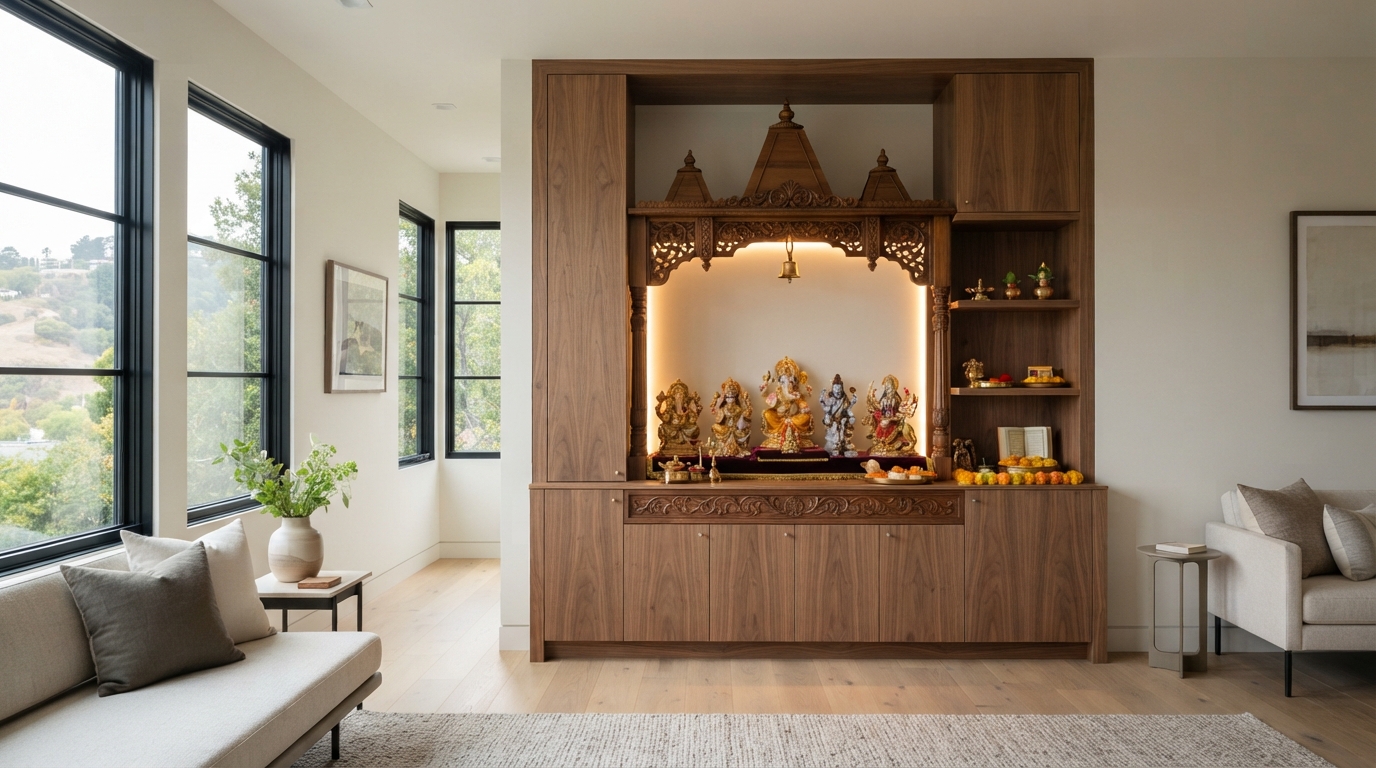

If you’re planning a home temple, you’ve probably searched for pooja mandir design ideas more than once this month. It makes sense. A mandir isn’t just furniture — it’s the spiritual heart of your home, and getting the design right matters. For Hindu families across San Jose, Santa Clara, and Fremont, finding pooja mandir design ideas that fit both tradition and a modern Bay Area home can feel tricky.
Most homes here weren’t built with a temple room in mind. So families end up squeezing a small marble mandir into a hallway corner, or placing it somewhere that just doesn’t feel right according to Vastu. That’s where good pooja mandir design ideas actually save you money and stress, because a custom-built mandir cabinet is designed around your home’s layout, not the other way around.
This guide walks through placement, wood species, lighting, and storage so you can plan a mandir that looks beautiful and functions the way your family actually needs it to.
Why Pooja Mandir Design Ideas Matter More in Bay Area Homes
South Bay homes come with tight floor plans, open-concept kitchens, and HOA rules that limit what you can build or attach to walls. That’s very different from homes back in India, where a whole room might be set aside for puja. Because of this, pooja mandir design ideas for the Bay Area need to solve a specific problem: how do you create a proper worship space in a home that has no obvious spot for one?
A custom mandir cabinet, built by a local cabinet maker who understands both woodworking and cultural needs, solves this. It can be built into an unused wall nook, a closet, or even a media wall, without sacrificing storage or square footage elsewhere in the home.
Where to Place Your Mandir: Vastu-Informed Layout Tips
Placement is usually the first thing families ask about. Traditionally, the northeast corner of the home is considered the most auspicious spot for a mandir, since it’s associated with positive energy and morning light. If northeast isn’t available, east or west-facing walls are the next best options.
A few practical placement tips for Bay Area layouts:
- Avoid placing the mandir directly under a staircase or attached to a bathroom wall.
- Keep it away from the kitchen if possible, or use a partition/cabinet door to separate the two spaces.
- In open-concept homes, a dedicated mandir nook with doors that close is often the cleanest solution — it keeps the space sacred without disrupting the living room’s look.
- If floor space is limited, wall-mounted or elevated mandir cabinets work well and free up the room below for other storage.
These small adjustments are part of what makes a set of pooja mandir design ideas actually livable, not just pretty in a photo.
Choosing the Right Wood Species
Wood choice affects both the look and the longevity of your mandir. Some of the most requested options for a custom pooja mandir in San Jose include:
Teak Wood
Teak is a traditional favorite for home temples because of its rich color and natural resistance to moisture and pests. It ages beautifully and holds fine carving detail well, which matters if you want traditional jali (lattice) work or carved pillars.
Sheesham (Indian Rosewood)
Sheesham has a warm reddish-brown tone and is slightly more budget-friendly than teak while still looking premium. It’s a strong choice for families who want a traditional look without the higher teak price tag.
Walnut and Maple
For families who want their mandir to blend into a more contemporary home, walnut and maple offer clean lines and a modern finish while still feeling warm and inviting. These woods pair well with minimalist mandir cabinet designs that have simple silhouettes instead of heavy carving.
Whichever species you pick, ask your builder about sealants and finishes that are food-safe and low-VOC, since incense, ghee lamps, and prasad are all part of daily use.
Lighting Ideas That Bring the Mandir to Life
Lighting is one of the most overlooked parts of pooja mandir design ideas, yet it changes the entire feel of the space. A few approaches that work well:
- Warm LED strip lighting built into the cabinet’s crown or shelves, hidden from direct view but glowing softly around the idols.
- Backlit temple domes (shikhara) using diffused LED panels for a gentle halo effect.
- Dimmable spotlights above the mandir for morning and evening aarti, so the space feels calm rather than harshly lit.
- Keeping open flame diyas away from wood surfaces by adding a heat-resistant brass or stone tray insert into the cabinet design.
Good lighting doesn’t just look nice in photos, it also protects the wood from soot and heat damage over time.
Storage: The Practical Side of Mandir Design
A mandir isn’t just idols and a diya. Most families need space for prasad, extra diyas, incense, pooja books, aarti thalis, and festival decorations. Smart storage is where a custom mandir cabinet really earns its cost compared to a store-bought one. Consider:
- Pull-out drawers below the main altar for pooja samagri and books
- A small enclosed cabinet for prasad that keeps it away from dust
- Adjustable shelving for seasonal items like Diwali diyas or Navratri decorations
- A slim drawer for matchboxes, camphor, and incense sticks, kept separate from food items
Building storage into the mandir cabinet itself means you’re not scattering pooja supplies across other parts of the house.
Matching the Mandir to Your Home’s Style
Some families want a mandir that stands out with traditional carving and a temple-dome silhouette. Others prefer something that blends quietly into a modern home, using flat panel doors and warm wood tones instead of ornate detail. Neither approach is wrong, the right pooja mandir design ideas are the ones that match how your family actually worships and how the rest of your home is styled.
If your living space already has walnut or oak cabinetry, matching wood tones between your kitchen and your mandir cabinet creates a cohesive look throughout the home, which many Bay Area families are now asking for.
According to the National Kitchen and Bath Association, custom cabinetry that reflects a homeowner’s lifestyle and cultural needs is one of the fastest-growing categories in residential design, and home temples fall right into that trend for South Asian households.
Working With a Local Cabinet Maker
Because pooja mandirs are deeply personal, working with a local builder who can visit your home, understand your space, and talk through Vastu and family preferences makes a real difference. A local custom mandir cabinet San Jose builder can also account for California humidity and HVAC conditions, which affect how solid wood expands and contracts over the year, something big-box furniture stores rarely consider.
Final Thoughts
Good pooja mandir design ideas start with understanding your home’s layout, your family’s daily rituals, and the materials that will hold up over years of diyas, incense, and prasad. Whether you want a grand carved teak temple or a simple modern mandir cabinet that tucks into a hallway nook, the goal is the same: a space that feels sacred every time you walk past it.
If you’re ready to turn these pooja mandir design ideas into an actual build, Alfawoodworks designs and builds custom home temples across San Jose and the greater Bay Area. Reach out through our contact page to start planning your mandir.
FAQs
Q1. What is the best direction to place a mandir in a Bay Area home?
Northeast is traditionally considered the most auspicious. If that’s not possible, east or west-facing walls are good alternatives.
Q2. What wood is best for a custom mandir cabinet?
Teak and sheesham are popular for their durability and traditional look, while walnut and maple work well for modern-style mandirs.
Q3. Can a mandir be built into an existing closet or wall nook?
Yes. Many Bay Area homes don’t have a dedicated puja room, so a custom-built cabinet in a closet, hallway nook, or wall recess is a common and practical solution.
Q4. How much does a custom pooja mandir cost in San Jose?
Costs vary based on size, wood species, and detailing, ranging from a few thousand dollars for a simple design to significantly more for hand-carved, large-scale mandirs.
Q5. Do custom mandirs include storage for prasad and pooja items?
Yes, most custom designs include drawers or cabinets for prasad, diyas, incense, and pooja books, which is one of the main advantages over pre-made mandirs.