
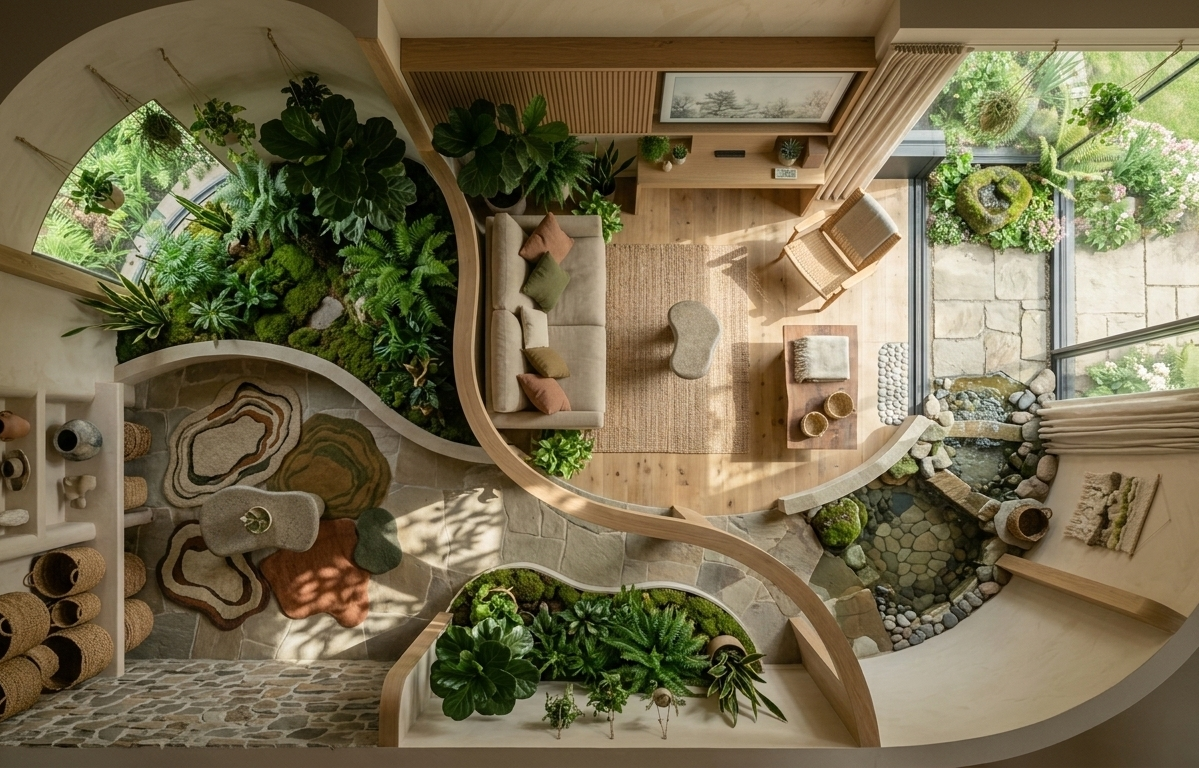

Creating a living space that feels connected to the natural world has become more than just a fleeting trend for homeowners in the Bay Area. As our lives become increasingly digital and fast paced, the desire to return to organic roots is driving a massive shift in how we approach our surroundings. This philosophy, known as Biophilic interior design, focuses on our innate human attraction to nature and seeks to weave that connection into the very fabric of our homes. By moving away from sterile, synthetic environments and embracing the textures, colors, and light of the outdoors, we can create sanctuaries that significantly improve our mental well-being and daily productivity.
Integrating these elements into a modern residence requires a thoughtful balance between architectural precision and organic chaos. It is not simply about adding a few potted plants to a corner; it is about a holistic approach that considers every surface and material. In 2026, Biophilic interior design has evolved to include sophisticated wood millwork, strategic light placement, and the use of sustainable materials that breathe life into a room. Whether you are living in the heart of San Jose or the quiet hills of Los Gatos, bringing the outdoors in can transform a standard house into a restorative retreat that feels grounded and timeless.
The Core Philosophy of Nature Centric Spaces
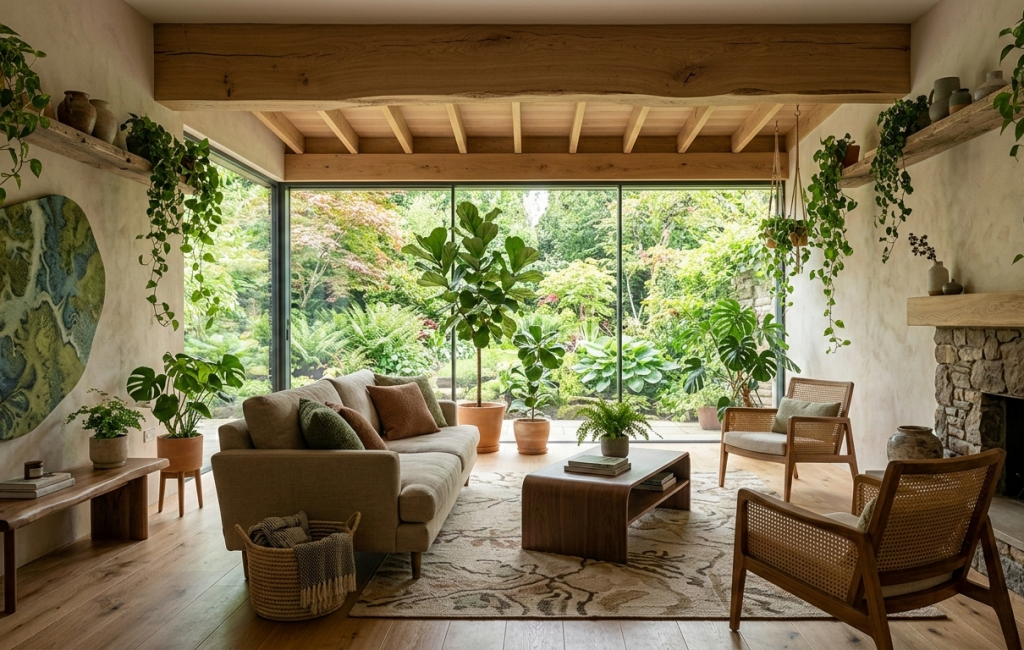
At its heart, the concept of a biophilic environment is built on the idea that humans are biologically predisposed to seek connections with nature. When we are deprived of these connections, we often feel more stressed and less creative. By implementing Biophilic interior design, we are essentially hacking our own biology to promote a sense of calm and focus. This can be achieved through “direct” connections, such as views of a garden, or “indirect” connections, such as the use of natural wood grains and earthy color palettes that mimic the forest floor.
The beauty of this design style is its versatility. You do not need to live in a rural area to benefit from these principles. Even a high rise apartment in a tech hub can be optimized to reflect the soothing patterns of the natural world. Designers are now focusing on “fractal patterns”, the repeating geometric shapes found in leaves, shells, and waves, to create visual interest that feels familiar and relaxing to the human eye. When you prioritize Biophilic interior design, you are making a long term investment in the emotional health of everyone who walks through your front door. This approach is backed by extensive environmental psychology research, specifically the 14 patterns of biophilic design, which categorize the specific ways that natural light, air, and materials directly reduce stress and improve cognitive function.
1. Maximizing Natural Light and Airflow
The most fundamental element of any nature inspired home is the presence of sunlight. Light governs our circadian rhythms, affecting everything from our sleep quality to our mood. To truly embrace Biophilic interior design, you must look at how light moves through your space throughout the day. This might involve replacing heavy drapes with sheer fabrics or strategically placing mirrors to bounce sunlight into darker corners. The goal is to create a dynamic environment where the light changes and shifts, much like it does in a forest clearing.
Natural ventilation is the second half of this equation. Fresh air movement prevents a space from feeling stagnant and artificial. Incorporating windows that allow for cross breezes or using ceiling fans that mimic the gentle movement of wind can make a profound difference. In a high end home, this often translates to large glass sliding doors that dissolve the barrier between the living room and the patio. This seamless transition is a hallmark of Biophilic interior design, ensuring that the scent of rain or the sound of rustling leaves becomes a part of your indoor experience.
2. Embracing the Warmth of Custom Woodwork
Wood is perhaps the most powerful tool in the biophilic toolkit. Unlike metal or plastic, wood is a living material that tells a story through its rings and knots. Incorporating high quality, custom millwork allows you to bring the tactile experience of a forest into your home. This is particularly effective in spaces where you spend the most time, such as the kitchen or the bedroom. When you choose modern kitchen cabinets crafted from natural hardwoods, you are introducing a sensory element that evokes a sense of stability and warmth that synthetic materials simply cannot replicate.
The key to successful wood integration is keeping the finish as close to the natural state as possible. Matte finishes and clear coats that highlight the intricate grain patterns are far more effective for Biophilic interior design than high gloss paints. Whether it is a white oak island or a walnut shelving unit, the presence of real wood helps to ground a room. It provides a visual and physical link to the earth, making the indoor environment feel less like a box and more like an extension of the natural world outside.
3. Creating Vertical Gardens and Living Walls
If you want to make a bold statement, a living wall is the ultimate expression of nature inside the home. These vertical gardens serve as natural air purifiers, removing toxins and adding much needed moisture to the air. In the context of Biophilic interior design, a living wall acts as a piece of “living art” that changes and grows over time. It provides a lush, vibrant green focal point that can soften the hard lines of modern architecture.
For those who may not have the space for a full scale living wall, grouped clusters of plants can achieve a similar effect. The trick is to vary the heights and textures of the foliage. Combine broad leafed tropicals with delicate ferns and trailing vines to create a miniature ecosystem. This layered approach is a core tenet of Biophilic interior design, as it mimics the complexity of a real outdoor landscape. Not only do these plants look beautiful, but the act of caring for them also fosters a nurturing connection to the environment.
4. Organic Textures and Tactile Materials
A biophilic home should be as pleasing to the touch as it is to the eye. Moving away from perfectly smooth, sterile surfaces in favor of textured materials creates a more “human” feel. Think of stone countertops with a leathered finish, wool rugs, or linen upholstery. These materials have a tactile honesty that aligns perfectly with Biophilic interior design. When our hands touch a cool stone surface or a rough woven fabric, it reinforces our connection to the physical world.
This appreciation for texture extends to the walls as well. Instead of flat drywall, consider architectural elements that add depth and shadow. Working with a custom wall decor builder in San Jose allows you to create feature walls using reclaimed wood or 3D slats that mimic the irregular patterns of tree bark. This adds a level of sophistication to Biophilic interior design, proving that a nature inspired home can still be incredibly modern and luxurious.
5. Incorporating the Element of Water
The sound and sight of water have a universally calming effect. In ancient traditions and modern science alike, moving water is associated with the release of negative ions and the reduction of stress hormones. Adding a small interior fountain or even a well placed aquarium can elevate your Biophilic interior design to a new level. The goal is to introduce a sense of movement and “flow” into the home, breaking up the static nature of walls and furniture.
Even the visual representation of water can be effective. Using blue and green hues, or reflective surfaces that mimic the shimmer of a lake, can trigger similar psychological benefits. In many luxury Silicon Valley homes, we see the use of “water features” that bridge the indoor and outdoor sections of the house. This design choice reinforces the idea that the home is not a fortress against nature, but a transparent vessel that exists within it. Biophilic interior design thrives when it acknowledges the fluid and ever changing state of the natural world.
6. Designing for “Prospect and Refuge”
This is a more psychological aspect of Biophilic interior design that traces back to our ancestors. “Prospect” refers to a wide, open view that allows us to see what is coming, while “Refuge” refers to a cozy, protected space where we feel safe. A well designed home should offer both. This might mean having a large, open plan living area with expansive views (prospect) and a small, wood paneled library or a tucked away reading nook (refuge).
Creating these layers of space makes a home feel more intuitive and comfortable. For those who work from home, having a dedicated space that feels like a quiet sanctuary is essential. You can enhance this feeling by installing custom home office cabinets that keep the clutter of technology hidden away, allowing the natural materials and views to take center stage. When a home balances these two sensations, it fulfills a deep seated biological need for both exploration and protection, which is the cornerstone of Biophilic interior design.
7. Using Earthy Color Palettes and Natural Dyes
The colors we choose for our walls and furniture have a direct impact on our nervous systems. While bright, neon colors can be overstimulating, an earthy palette derived from nature promotes relaxation. Think of the soft greys of river stones, the deep greens of moss, and the warm browns of tilled soil. These colors form the foundation of Biophilic interior design, providing a neutral backdrop that allows natural light and wood grains to shine.
Using natural dyes and mineral based paints further enhances this connection. These products often have a depth and variation in color that synthetic paints lack, creating a “living” wall finish that responds beautifully to light. When you align your color choices with the environment surrounding your home, you create a sense of place. Biophilic interior design is most successful when it feels like it belongs in its specific geographic location, reflecting the local flora and landscape through its tonal choices.
The Role of Sustainability in Biophilic Design
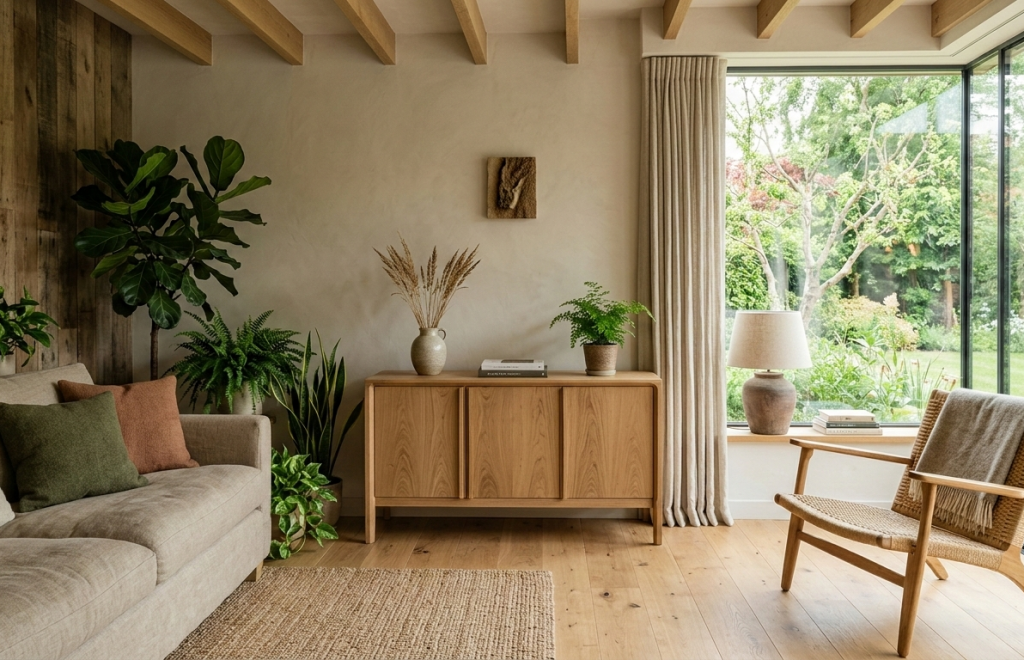
You cannot truly have a nature inspired home if the materials used to build it are harmful to the planet. Sustainability and Biophilic interior design go hand in hand. This means choosing woods that are harvested from responsibly managed forests, using low VOC finishes that don’t off-gas harmful chemicals into your living air, and opting for durable materials that won’t end up in a landfill in five years. A biophilic home is a respectful home, acknowledging its debt to the resources that created it.
Investing in high quality, handcrafted furniture and cabinetry is a major part of this sustainable mindset. When a piece is made with care and precision, it lasts for generations, reducing the need for the “fast furniture” cycle that is so damaging to our environment. By prioritizing longevity and craftsmanship, you are practicing a form of Biophilic interior design that honors the natural world by using its gifts wisely and sparingly.
Integrating Technology into a Natural Space
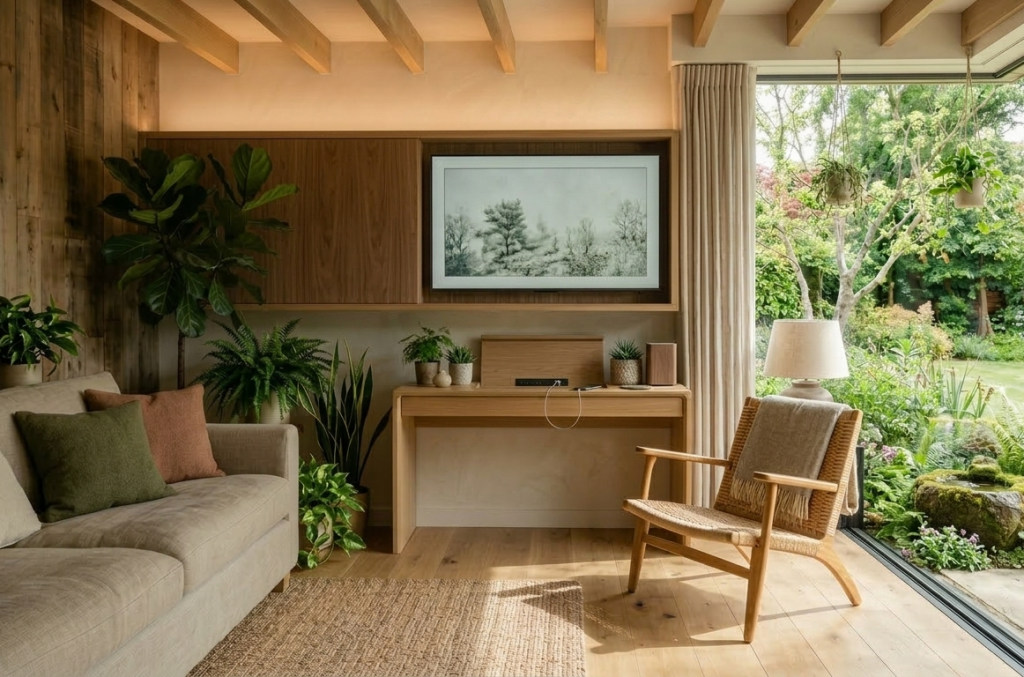
One of the biggest challenges in modern design is how to handle the inevitable presence of screens and wires. In a space dedicated to Biophilic interior design, technology can often feel jarring and out of place. The solution lies in integration and concealment. Hidden charging stations, “disappearing” televisions, and smart lighting that adjusts its color temperature to match the sun are all ways to keep technology functional without letting it dominate the room.
The goal is to let the natural elements be the “hero” of the space. When the tech is tucked away inside custom cabinetry, your eyes are free to focus on the grain of the wood or the view out the window. This allows you to reap the benefits of Biophilic interior design even in a home that is fully equipped with the latest smart features. It is about creating a hierarchy where nature comes first and convenience follows quietly behind.
The Measurable Benefits of Nature Focused Living
The shift toward Biophilic interior design is backed by a growing body of scientific research. Studies have shown that employees in offices with natural elements are fifteen percent more productive than those in sterile environments. In residential settings, the presence of nature has been linked to lower blood pressure, reduced heart rates, and faster recovery from illness. These aren’t just aesthetic choices; they are health choices.
By reducing the “cognitive load” on our brains through the use of natural patterns and colors, we allow our minds to rest and recharge. In an era where burnout is a common struggle, the importance of a home that acts as a battery for the soul cannot be overstated. Biophilic interior design provides the framework for this restorative living, ensuring that your home is a place of true replenishment.
Future Proofing Your Home with Biophilic Principles
As we look toward the future of home design, it is clear that our connection to nature will only become more vital. As cities grow denser and technology becomes more invasive, the “biophilic movement” will transition from a luxury to a necessity. Implementing Biophilic interior design today ensures that your home remains a relevant and high value asset for years to come. It is a design philosophy that does not age because it is based on the most ancient relationship we have.
Whether you are starting a full scale renovation or simply looking to refresh a single room, the principles of biophilia are accessible to everyone. Start by clearing away the clutter, opening the windows, and introducing a piece of real wood into your space. From there, you can slowly layer in the textures, plants, and light that make Biophilic interior design so special. The result will be a home that doesn’t just look like a picture in a magazine, but one that feels like a true extension of yourself and the natural world.
Conclusion
Transforming a house into a biophilic sanctuary is a rewarding journey that pays dividends in comfort and peace of mind. By focusing on the seven ways to bring nature in, from maximizing light to embracing the warmth of custom wood, you can create a living environment that is both sophisticated and deeply grounded. Biophilic interior design is more than an aesthetic; it is a commitment to living in harmony with the world around us. In the Bay Area, where the boundary between tech and nature is constantly shifting, there is no better way to find your balance than by bringing the beauty of the outdoors inside. Your home should be the place where you feel most connected, most relaxed, and most alive, and there is no better designer for that task than nature itself.
Frequently Asked Questions
What is the easiest way to start with Biophilic interior design?
The simplest starting point is to maximize your natural light and introduce real plants into your most used rooms. Removing heavy window treatments and placing easy to care for greenery like snake plants or pothos can immediately shift the energy of a room toward a more biophilic feel.
Does Biophilic interior design work in small apartments?
Absolutely. In fact, biophilic principles can make small spaces feel much larger and less restrictive. Focus on vertical elements like shelving and hanging plants to save floor space, and use mirrors to amplify the natural light you do have.
Is custom woodwork expensive to maintain in a biophilic home?
When wood is finished properly with high quality oils or matte lacquers, it is surprisingly easy to maintain. Regular dusting and the occasional use of a wood safe cleaner will keep your custom pieces looking beautiful for decades. The key is to avoid harsh chemicals that can strip the natural oils from the wood.
Can I use artificial plants for Biophilic interior design?
While artificial plants provide the “visual” green, they do not offer the air purification or the “living” connection that real plants provide. If you have a black thumb, look for low maintenance real plants or focus on other biophilic elements like natural wood and stone rather than settling for plastic replicas.
What are the best wood species for a biophilic look?
Woods with prominent grains and warm tones like White Oak, Walnut, and Cherry are excellent choices. These species provide a strong visual and tactile connection to nature, which is the ultimate goal of Biophilic interior design.