
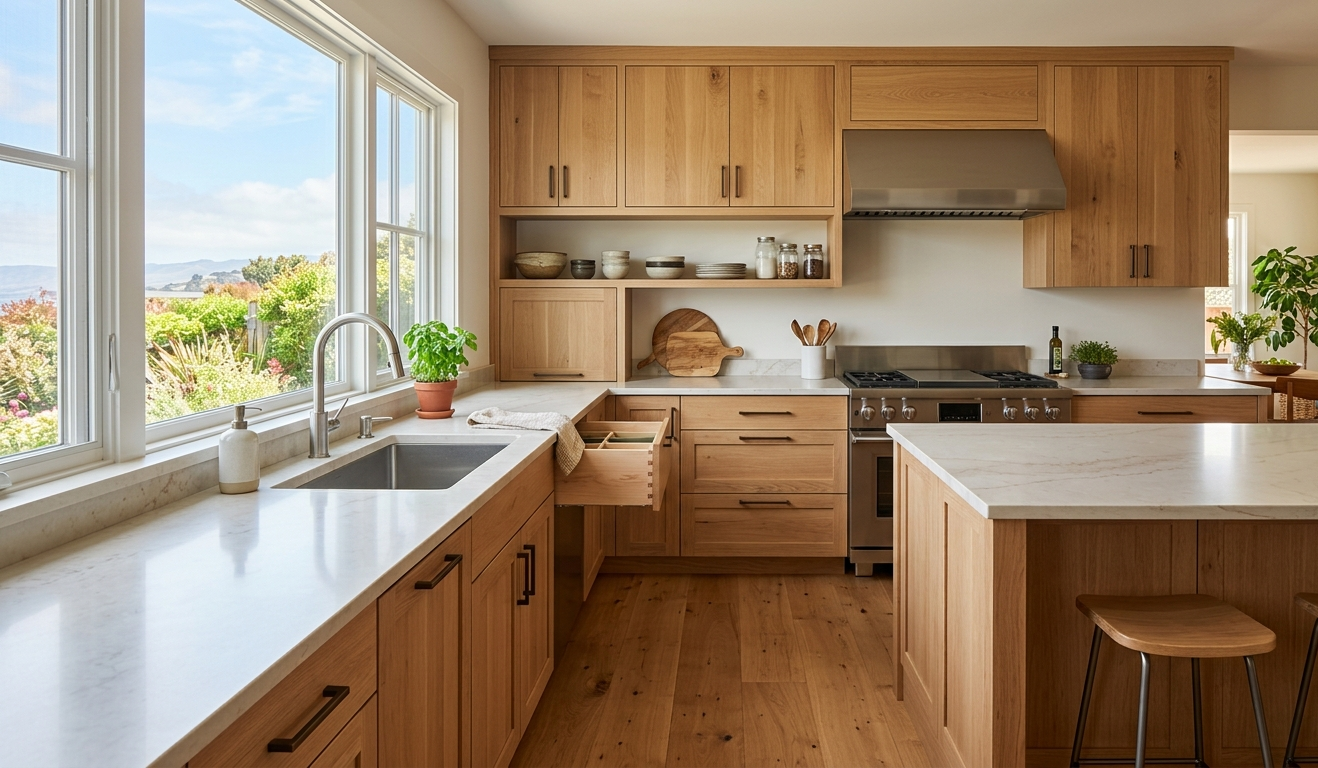

Homeowners today are looking for more than just aesthetics; they want a kitchen that aligns with a healthier lifestyle and a healthier planet. If you are planning a remodel, choosing eco-friendly kitchen cabinets is one of the most impactful decisions you can make for your indoor air quality and environmental footprint. Whether you are looking for high-end aesthetics or functional durability, opting for sustainable custom wood ensures your home remains a safe, beautiful sanctuary. By prioritizing materials that are harvested responsibly and treated with non-toxic finishes, you can create a space that stands the test of time while supporting renewable resources.
The Growing Demand for Sustainable Kitchen Solutions
The shift toward sustainability in home design is not merely a passing trend; it is a fundamental change in how we perceive our living environments. In regions like Tracy, California, residents are increasingly aware of the impact that building materials have on both the local ecosystem and personal health. The kitchen, often referred to as the heart of the home, is where family members gather most frequently. Therefore, the materials used in this space, particularly the cabinetry, which covers the largest surface area, must be scrutinized for safety and environmental ethics.
Traditional cabinetry manufacturing has historically relied on industrial shortcuts that prioritize low costs over longevity. This often involves the use of medium-density fiberboard (MDF) or particleboard held together by glues that release gases over time. By choosing a sustainable path, you are rejecting these “disposable” furniture mentalities in favor of craftsmanship that honors the natural origin of the materials.
Why Sustainable Cabinetry Matters for Your Home’s Air Quality
The traditional cabinetry industry often relies on materials that contain high levels of formaldehyde and volatile organic compounds (VOCs). These chemicals can “off-gas” into your kitchen for years, compromising the air quality your family breathes daily. VOCs are a primary contributor to “Sick Building Syndrome,” which can lead to headaches, respiratory issues, and long-term health complications. Sustainable cabinetry changes that narrative by focusing on three core pillars: environmental impact, indoor health, and long-term durability.
In Tracy, CA, where the climate can fluctuate between dry heat and cool delta breezes, choosing high-quality custom wood that is properly sealed with eco-friendly finishes prevents warping and ensures the longevity of your investment. When we talk about sustainable wood, we are referring to timber sourced from forests managed by the Forest Stewardship Council (FSC). This certification guarantees that the wood was harvested in a way that protects biodiversity, prevents deforestation, and respects the livelihoods of local workers. Choosing these materials means you are participating in a global effort to preserve old-growth forests while still enjoying the luxury of fine wood products.
Top Materials for Eco-Friendly Kitchen Cabinets
Choosing the right material is the foundation of any sustainable kitchen project. Not all wood is created equal, and understanding the differences helps you make an informed choice that balances performance with environmental responsibility.
FSC-Certified Hardwoods
Solid hardwoods like maple, oak, and cherry remain the gold standard for custom cabinetry. When these are FSC-certified, they represent a renewable resource that captures carbon throughout its growth cycle. Hardwood is incredibly durable, meaning these cabinets won’t need to be replaced for decades. In a world of fast furniture, the longevity of solid wood is the ultimate form of sustainability. It reduces the need for frequent manufacturing and transportation, which are the largest contributors to the carbon footprint of home goods.
Reclaimed Wood
Reclaimed wood offers a unique, rustic character that cannot be replicated with new timber. By repurposing wood from old barns, factories, or warehouses, you are preventing waste from entering landfills and giving new life to high-quality old-growth timber. Reclaimed wood is often more stable than new wood because it has already undergone years of natural seasoning. This makes it less prone to shrinking or swelling, which is an excellent functional benefit for kitchen environments.
Bamboo and Lyptus
While technically a grass, bamboo is a rapidly renewable resource that can be harvested every five to seven years, compared to the 30 to 50 years required for most hardwoods. It is harder than many traditional woods and provides a modern, sleek aesthetic. Lyptus is another sustainable alternative a hybrid eucalyptus that grows quickly and offers a look similar to mahogany or cherry. Both materials provide a high degree of structural integrity while being significantly more renewable than traditional forest products.
The Role of Low-VOC and Formaldehyde-Free Finishes
The “eco-friendly” label does not stop at the wood itself. The glues, stains, and paints used to finish your cabinets play a massive role in your home’s safety. Many mass-produced cabinets use urea-formaldehyde binders in their plywood or particleboard cores. Formaldehyde is a known carcinogen, and its presence in the home should be minimized at all costs.
To ensure your kitchen is truly green, you must look beyond the surface. Look for:
- Formaldehyde-Free Plywood: Specifically, look for NAUF (No Added Urea Formaldehyde) plywood. This uses soy-based or other natural adhesives to bond the wood layers together.
- Water-Based Stains: These have significantly lower VOC levels compared to traditional oil-based finishes. They dry faster and lack the pungent chemical odor associated with traditional cabinet shops.
- Natural Oil Finishes: Options like linseed or tung oil provide a beautiful, breathable finish without any toxic chemicals. These oils penetrate the wood grain, offering protection while highlighting the natural texture of the timber.
Custom vs. Stock: The Sustainability Advantage
Custom cabinetry is inherently more sustainable than “big box” stock options for several logistical and material reasons. Stock cabinets are often manufactured overseas in bulk, leading to a massive carbon footprint from international shipping. Furthermore, these products are built to standard sizes, often resulting in “filler” pieces that waste space and material during installation.
When you choose custom work from a local specialist, every piece of wood is cut to the exact specifications of your kitchen layout. This precision minimizes material waste during the production phase. Local craftsmanship also means your cabinets are not traveling across an ocean to reach your home in Tracy. By sourcing locally, you are supporting the regional economy and ensuring that the artisans building your kitchen adhere to the strict environmental and labor standards of California.
Furthermore, custom cabinets are built using superior joinery techniques, such as dovetail joints and mortise-and-tenon construction. These methods do not rely solely on chemical adhesives for strength. This mechanical integrity ensures that the cabinets can withstand the daily rigors of a busy kitchen without falling apart, whereas cheaper stock cabinets often rely on staples and glue that fail over time.
Data-Backed Insights: The Longevity of Quality
According to industry data, the average lifespan of low-grade particleboard cabinetry is roughly 10 to 15 years. In contrast, well-constructed custom wood cabinets can last 50 years or more with minimal maintenance. From a sustainability perspective, this is a 400% improvement in resource efficiency. When you consider the energy required to harvest, process, ship, and install cabinets, extending the replacement cycle is the most effective way to reduce environmental impact.
A recent study on indoor air quality also showed that homes utilizing “green” cabinetry with low-VOC finishes had 60% lower concentrations of airborne toxins compared to homes with standard builder-grade materials. For families with children or individuals with asthma, these statistics translate to a tangible improvement in quality of life.
How to Maintain Your Eco-Friendly Wood Cabinets
To keep your sustainable cabinets looking pristine, you should avoid harsh chemical cleaners that can break down eco-friendly, water-based finishes. Natural finishes are durable, but they require a gentle touch to maintain their luster.
- Daily Cleaning: Use a microfiber cloth dampened with warm water and a drop of mild, pH-neutral dish soap. This is sufficient to remove grease and food particles without stripping the finish.
- Moisture Control: Always wipe down spills immediately. While wood is resilient, standing water can eventually penetrate the grain and cause swelling, even in the highest quality custom pieces.
- Avoid Silicone: Never use “lemon oil” or waxes that contain silicones. These products create a plastic-like buildup that attracts dust and makes it nearly impossible to touch up or refinish the cabinets in the future.
- Humidity Regulation: In Tracy, keeping your indoor humidity between 35% and 55% will prevent the natural expansion and contraction of the wood, ensuring the joints remain tight for decades.
Semantic Elements of Sustainable Wood Selection
When discussing eco-friendly kitchen cabinets, we must also consider the “carbon sequestration” properties of wood. Unlike plastic or metal, wood stores carbon. By using wood in your home, you are effectively locking away carbon that would otherwise be in the atmosphere. This makes wood a uniquely “carbon-positive” building material when sourced from managed forests.
Furthermore, the “End-of-Life” plan for your cabinets is a key part of semantic SEO and sustainable thinking. If you ever decide to change your kitchen again decades from now, solid wood cabinets can be sold, repurposed, or even biodegraded. This is a stark contrast to plastic-laminated MDF, which cannot be recycled and often sits in landfills for centuries.
Frequently Asked Questions (FAQ)
Are eco-friendly cabinets more expensive?
While the upfront cost can be 15% to 25% higher than mass-produced particleboard options, the long-term value is significantly greater. Because they are built from higher-quality materials, they last four times longer and can be refinished rather than replaced, saving you tens of thousands of dollars over the life of your home.
What is the best wood for sustainable cabinets in California?
Maple, Walnut, and White Oak are excellent choices for homeowners in the USA. These species are abundant in North America, reducing the carbon footprint of transport. They are also incredibly hard and resistant to the wear and tear of a high-traffic kitchen.
How do I know if cabinets are truly non-toxic?
Ask your cabinet maker for the Material Safety Data Sheets (MSDS) or specific details on the adhesives and finishes used. Look for “NAUF” (No Added Urea Formaldehyde) and “Low-VOC” or “Zero-VOC” labels. Transparency is a hallmark of a truly sustainable business.
Can I get eco-friendly cabinets in custom colors?
Yes. Modern water-based paints and stains come in a nearly limitless palette. You do not have to sacrifice style or color variety to maintain an eco-friendly home. You can achieve the exact aesthetic you desire from modern minimalist to classic farmhouse while using green materials.
Does reclaimed wood require special care?
Reclaimed wood is generally very stable, but because of its textured surface, it may require more frequent dusting. It should be sealed with a high-quality eco-friendly matte finish to protect its history while making it easy to wipe clean.
Conclusion: Investing in a Greener Future
Choosing eco-friendly kitchen cabinets is a powerful way to enhance your home’s value while protecting the environment. By focusing on sustainable custom wood, non-toxic finishes, and local craftsmanship, you create a kitchen that is as healthy as it is beautiful. These choices reduce the strain on our natural forests and ensure that your indoor air remains free of harmful chemicals.
A kitchen remodel is a significant journey, and selecting materials that reflect your values is the best way to ensure long-term satisfaction. When you invest in custom work, you aren’t just buying a product; you are investing in a legacy of quality that benefits your family and the planet. If you are ready to transform your space with high-quality, sustainable cabinetry tailored to your needs, our team is ready to assist you. Please contact us at Alfa Woodworks to discuss your project and discover how we can bring your vision for a green, custom kitchen to life in Tracy, CA. We look forward to helping you build a beautiful, sustainable home.