
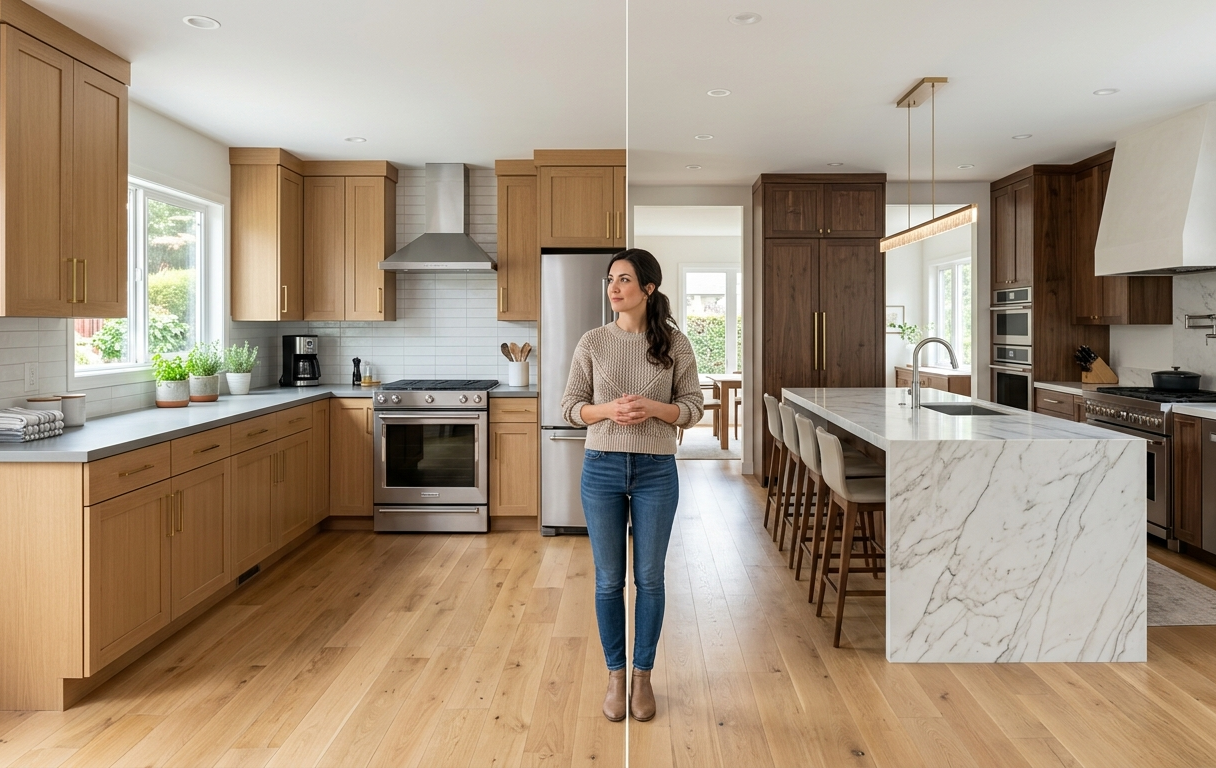

Deciding how to update your kitchen is one of the most significant choices you will make as a homeowner. The kitchen often serves as the hub of daily life, and the cabinets are the most visible element of that space. When the doors start to look dated or the finish begins to peel, you are faced with a major dilemma: Kitchen Cabinet Refacing vs Replacing. Both paths offer a fresh look, but they involve very different processes, timelines, and financial commitments. In 2026, many homeowners are looking for ways to balance high-end aesthetics with practical investments, making this comparison more relevant than ever.
Choosing between these two options requires an honest look at the current state of your kitchen. Are the “bones” of your cabinets still strong? Do you like the current layout of your appliances and work zones? If the answer is yes, you might be a candidate for a cosmetic update. However, if your kitchen feels cramped or the cabinet boxes are made of low-quality materials that are falling apart, a full structural change might be necessary. Understanding the nuances of Kitchen Cabinet Refacing vs Replacing will help you avoid spending money on a temporary fix when a permanent solution is what your home truly needs.
What is Cabinet Refacing?
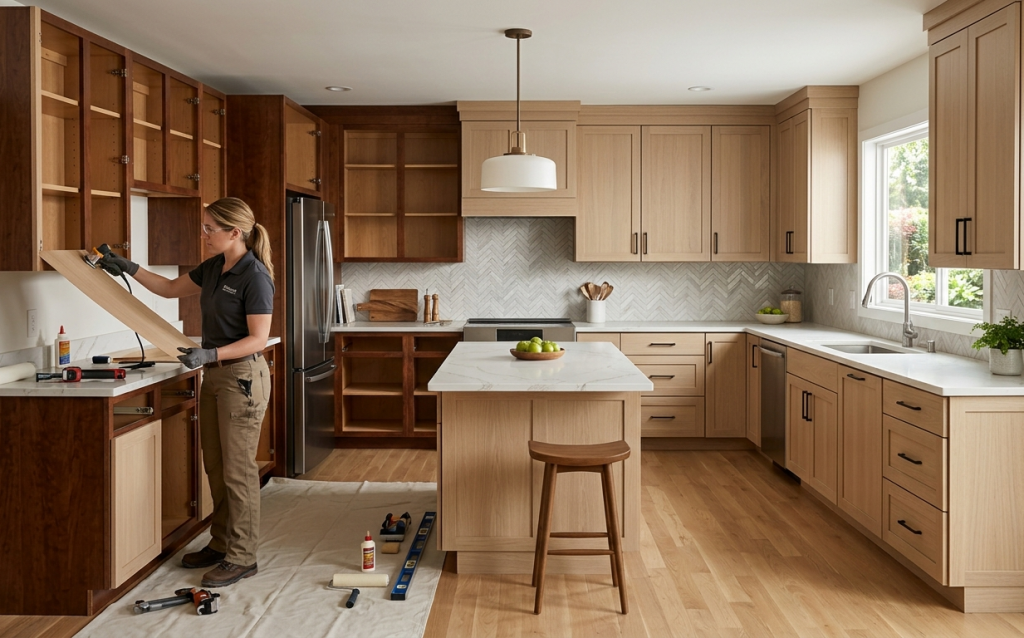
Refacing is essentially a professional “facelift” for your kitchen. In this process, the existing cabinet boxes remain in place. The installer removes the old doors, drawer fronts, and hardware. The exterior surfaces of the cabinet boxes are then covered with a new veneer of real wood or durable laminate that matches the new doors. Once the boxes are wrapped, brand new doors and drawer fronts are installed, along with updated hinges and handles.
The main appeal of this method is that it is much less invasive than a full remodel. You don’t have to worry about tearing out countertops or dealing with plumbing and electrical changes. When looking at Kitchen Cabinet Refacing vs Replacing, many people choose refacing because it allows them to keep using their kitchen during the project. It is a sustainable choice that keeps functional wood out of landfills while still providing a look that is indistinguishable from brand new cabinetry to the untrained eye.
When Replacing is the Only Real Option
There are certain scenarios where refacing simply won’t cut it. If your cabinet boxes are made of thin particle board that has warped or suffered water damage near the sink, they cannot support a new veneer or heavy new doors. Furthermore, if you hate your current layout, refacing won’t help. You cannot move a cabinet to a different wall if you are keeping the original boxes.
In these cases, the debate of Kitchen Cabinet Refacing vs Replacing leans heavily toward a full replacement. Starting from scratch allows you to fix architectural flaws. You can extend your cabinets to the ceiling for extra storage, add a large kitchen island, or create specialized zones for baking and coffee. Many homeowners in the Bay Area find that investing in a custom kitchen cabinet in San Jose is the better long-term move because it increases the functional value and resale appeal of the home far more than a simple surface update could.
The Financial Breakdown: Cost Comparison
Budget is usually the deciding factor for many families. Generally, refacing can save you about 30% to 50% compared to the cost of a full custom replacement. You are paying mostly for labor and the new doors, rather than the raw materials of entire cabinet boxes. This makes it an attractive option for those who want a high-end look on a moderate budget.
However, it is important to look at the “cost per year” of life expectancy. A refaced cabinet is still an old cabinet box. If those boxes only have five years of life left in them, you might regret not spending the extra money on a full replacement now. When weighing Kitchen Cabinet Refacing vs Replacing, consider that brand new modern kitchen cabinets come with modern features like soft-close slides and full-extension drawers that old boxes might not be able to accommodate easily.
Timeline and Project Duration
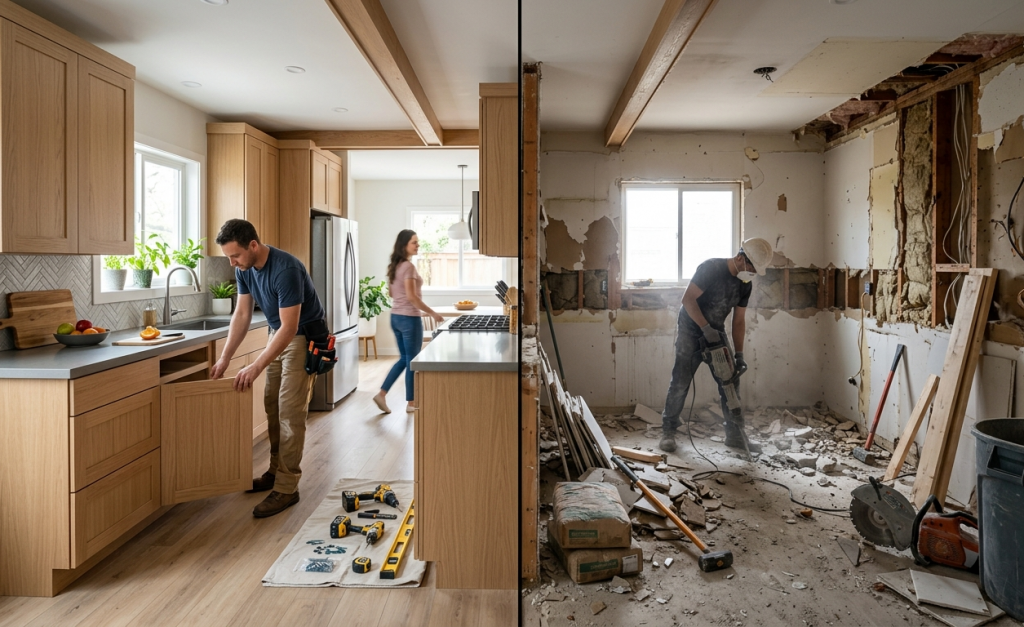
If you are someone who hates the mess and noise of construction, the timeline will be very important to you. A refacing project can often be completed in three to five days. Since the countertops and appliances stay in place, the disruption to your daily routine is minimal. You can usually cook dinner in your kitchen the same night the installers leave.
On the other hand, a full replacement is a multi-week or even multi-month journey. It involves demolition, potential flooring repairs, and a period where you will likely be living without a functioning kitchen. When considering Kitchen Cabinet Refacing vs Replacing, you have to ask yourself if you have the patience and the temporary living arrangements to handle a full-scale renovation. For those who want a quick “refresh” before a holiday or a big event, refacing is almost always the winner in terms of speed.
Environmental Impact and Sustainability
In 2026, sustainability is a major part of the home improvement conversation. Refacing is the more eco-friendly option because it preserves the bulk of the existing wood. By keeping the cabinet boxes, you are reducing the amount of waste that goes to the dump and lowering the demand for new timber. This significantly reduces the carbon footprint of your kitchen update.
However, if you do choose to replace your cabinets, you can still be sustainable by choosing high-quality, responsibly sourced wood. When you work with a craftsman who understands modern kitchen design, you can ensure that your new cabinets are built to last for fifty years rather than ten. Longevity is its own form of sustainability. The decision of Kitchen Cabinet Refacing vs Replacing from an environmental perspective often comes down to whether you are extending the life of an existing product or investing in a new one that will stand the test of time.
Customization and Design Flexibility
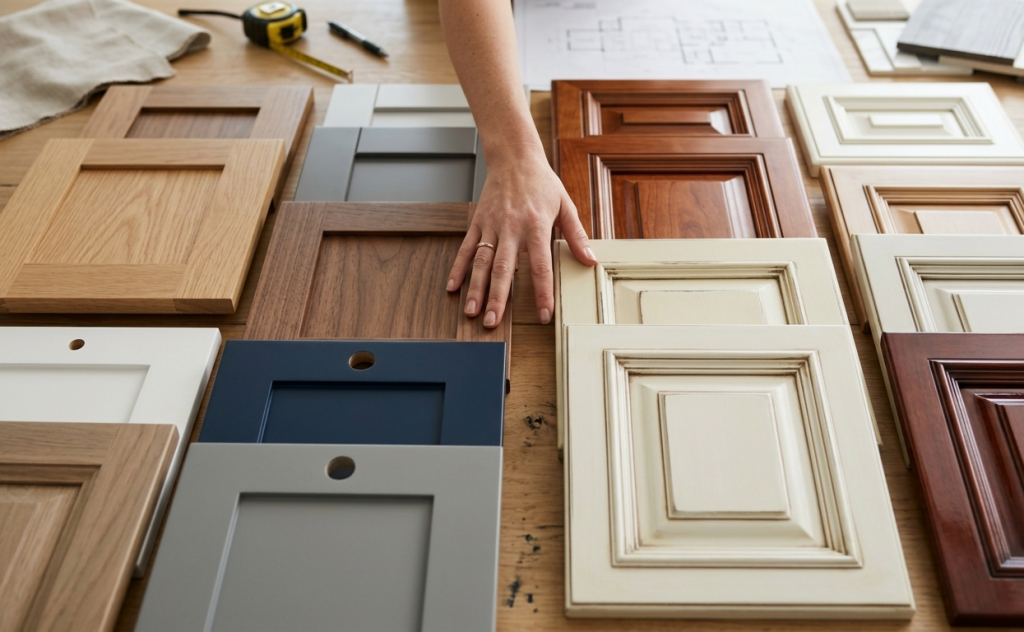
Refacing offers a surprising amount of design flexibility. You can change the wood species, the color of the paint or stain, and the style of the door. You can go from a dark, traditional raised-panel look to a sleek, white flat-panel modern look quite easily. You can even add a few new elements, like a matching wine rack or a small pantry, to complement the refaced units.
But if you want a true transformation, replacement is the way to go. Refacing is limited by the existing footprint. If you want deep drawers instead of lower cabinets with doors, you usually need new boxes. If you want to integrate a paneled refrigerator so it looks like part of the furniture, you need a custom build. The Kitchen Cabinet Refacing vs Replacing choice is often a choice between “fixing the look” and “reinventing the space.”
Quality of Materials and Craftsmanship
When you reface, you are putting a new skin over an old skeleton. If the skeleton is made of solid plywood and is still square and level, the result will be excellent. However, many “big box” store cabinets from the 1990s and early 2000s were made with low-grade particle board that absorbs moisture and crumbles over time. Applying a veneer to these materials is like building a house on sand.
When you replace it with high-quality custom work, you are getting furniture-grade plywood and solid wood frames. The craftsmanship involved in a full replacement ensures that every joint is perfect and every drawer is perfectly aligned. For many, the peace of mind that comes with knowing the internal structure is as beautiful as the exterior makes the Kitchen Cabinet Refacing vs Replacing debate very easy to resolve in favor of replacing.
Impact on Home Resale Value
Real estate experts often point to the kitchen as the room that sells a house. Prospective buyers are very good at spotting the difference between a superficial update and a quality renovation. A refaced kitchen looks great in photos and can definitely help a home sell faster, but a savvy buyer will open the drawers. If they see old, stained interiors or worn-out wooden drawer slides, they may lower their offer.
A full kitchen replacement, especially when done with a cohesive design, typically offers one of the highest returns on investment (ROI) in home improvement. It tells a buyer that the home has been properly maintained and updated for the future. In the context of Kitchen Cabinet Refacing vs Replacing, if your goal is to stay in the home for twenty years, choose what makes you happy. If you are planning to sell in the next two to three years, refacing might give you the “pop” you need without the massive expense. To see how these choices stack up financially in the current market, you can consult the official 2026 Fixr report on kitchen remodel ROI, which highlights that targeted cabinetry updates can yield over 80% ROI, making it one of the smartest investments for California homeowners looking to maximize resale value.
Durability and Long-Term Maintenance
Refacing relies heavily on the quality of the adhesive used to apply the veneer. In high-heat areas, such as next to a stove or dishwasher, lower-quality veneers can sometimes start to peel or “delaminate” over time. While modern adhesives are much better than they used to be, it is still a potential point of failure that doesn’t exist with solid wood cabinetry.
New custom cabinets are built as unified pieces. There is no veneer to peel because the color and finish are applied directly to the wood. This makes them much easier to maintain over the long haul. When looking at Kitchen Cabinet Refacing vs Replacing, think about the “wear and tear” your kitchen faces. A busy family with young kids and pets might be better off with the rugged durability of new, solid construction.
The Hybrid Approach
Sometimes, the answer isn’t strictly one or the other. Many designers now suggest a hybrid approach. You might reface the perimeter cabinets that are in good shape but replace a small, poorly designed island with a larger, custom-built one. This allows you to save money where possible while spending it where it will have the most impact on how you use the space.
This hybrid model requires a skilled eye to ensure that the new and refaced elements match perfectly in terms of color and door style. It is a sophisticated way to handle the Kitchen Cabinet Refacing vs Replacing question by customizing the solution to your specific floor plan. It provides the best of both worlds: the speed and savings of refacing combined with the functional upgrades of new construction.
Dealing with Countertops and Backsplashes
One of the biggest “hidden” factors in this decision is your countertop. If you recently invested in expensive quartz or granite and you love it, refacing is your best bet. Removing cabinets almost always requires removing the countertops, and there is a high risk that the stone will crack during the process.
Conversely, if you hate your countertops, you should probably consider a full replacement. Once the countertops are off, it is the perfect time to replace the cabinets beneath them. Doing it the other way around—replacing cabinets later but trying to save the new counters, is incredibly difficult and often more expensive. The Kitchen Cabinet Refacing vs Replacing decision is often dictated by the “top-down” reality of your kitchen’s current materials.
Lighting and Electrical Upgrades
Modern kitchens require a lot more power and light than older ones. When you reface, it is difficult to add under-cabinet lighting or move outlets because the cabinet boxes are in the way. You are mostly stuck with the electrical layout you already have.
During a full replacement, the walls are often exposed. This is the perfect time to add dedicated circuits for high-end appliances, install LED strip lighting, or even put outlets inside drawers for charging stations. If your electrical system is outdated, the Kitchen Cabinet Refacing vs Replacing debate should include the cost of these necessary modern upgrades. A kitchen that looks modern but can’t handle a modern toaster is a frustration no homeowner wants.
Choosing the Right Professional
Whether you choose to reface or replace, the quality of the person doing the work is what matters most. Refacing is a meticulous task that requires a steady hand and an eye for detail. A poor veneer job will look cheap and start to fail within a year. Replacing cabinets requires structural knowledge and an understanding of how to level units in a house that might not be perfectly straight.
Always look for a professional with a portfolio of local work. For example, seeing the results of custom kitchen cabinets in San Jose projects can give you confidence in a builder’s ability to handle complex Bay Area homes. Ask for references and specifically ask how they handled challenges during the project. A good contractor will help you navigate the Kitchen Cabinet Refacing vs Replacing choice by giving you an honest assessment of your existing cabinets.
Conclusion
At the end of the day, the choice between Kitchen Cabinet Refacing vs Replacing is about matching your goals with your reality. If you have high-quality boxes, a layout that works, and a desire for a quick, eco-friendly update, refacing is a brilliant choice. It provides a stunning visual transformation for a fraction of the cost and time. However, if your kitchen’s foundation is failing, or if you find yourself constantly fighting against a poor layout, a full replacement is a much wiser investment. It allows you to build the kitchen of your dreams from the ground up, ensuring that every drawer and cupboard is exactly where you want it. Take the time to inspect your cabinets, consider your long-term plans for the home, and consult with a professional. Whichever path you choose, the result will be a more beautiful, functional heart of the home that you and your family can enjoy for years to come.
Frequently Asked Questions
Can I reface my cabinets myself?
While DIY kits exist, refacing is much harder than it looks. It requires specialized tools to trim the veneer precisely and ensure a bubble-free bond. Most homeowners find that the professional finish is worth the extra cost, especially since errors can be very expensive to fix.
Is refacing always cheaper than replacing?
In about 95% of cases, yes. However, if you choose extremely expensive exotic wood doors or high-end custom hardware for a refacing project, and compare that to basic, entry-level stock cabinets for a replacement, the costs can end up being similar. Generally, for a like-for-like quality level, refacing is significantly more affordable.
How do I know if my cabinet boxes are in good enough condition to reface?
Check for three things: stability, moisture, and material. If the cabinets don’t wobble when you lean on them, have no signs of mold or wood rot, and are made of plywood or solid wood rather than thin MDF, they are likely good candidates. A professional will also check if they are “plumb and level.”
Does refacing include the inside of the cabinets?
Usually, no. Refacing covers the exterior surfaces and the frames. The insides stay the same. If your cabinet interiors are stained or ugly, you can choose to paint them or line them with new material, but this is usually an additional cost not included in a standard refacing quote.
Can I change the size of my cabinets during refacing?
No. Refacing is strictly a surface treatment for existing structures. If you want to make a cabinet taller, wider, or move its location, you will need to replace that specific unit or the entire run of cabinetry.