
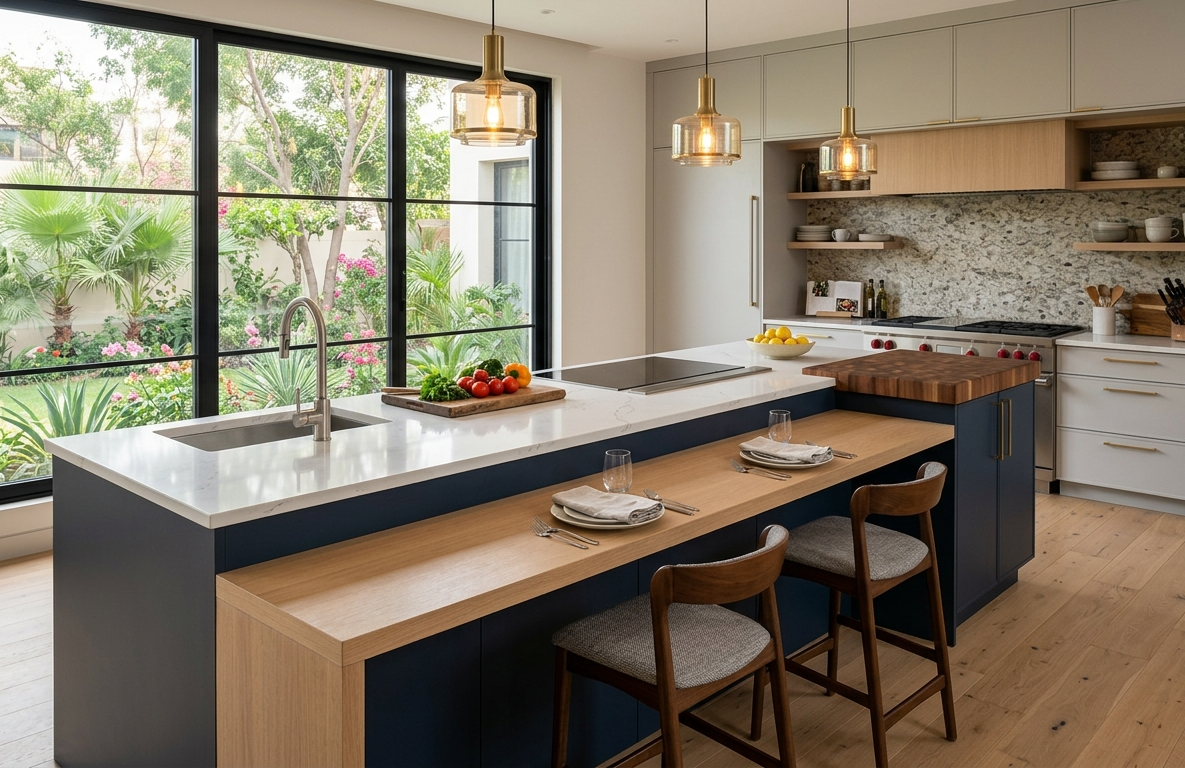

The modern kitchen has shifted from a hidden service room to the vibrant heart of the home, acting as a social hub where culinary creativity and family connection intersect. At the center of this transformation is a versatile feature that combines storage, preparation space, and comfort. Integrating a kitchen island with seating into your layout is more than just a trend; it is a fundamental shift in how we inhabit our living spaces. This multipurpose installation allows the cook to remain part of the conversation while providing a dedicated spot for casual breakfasts, homework sessions, or evening gatherings with friends.
When homeowners start planning a renovation, they often look for ways to maximize both utility and style. A well-designed kitchen island with seating provides a seamless transition between the active cooking zone and the relaxed dining area. It bridges the gap between formal dining rooms and the quick pace of a modern lifestyle. As we explore the various innovative designs available in 2026, it becomes clear that the key to a successful island is finding the perfect balance between ergonomic comfort and high-end aesthetics.
Defining the Purpose of Your Island
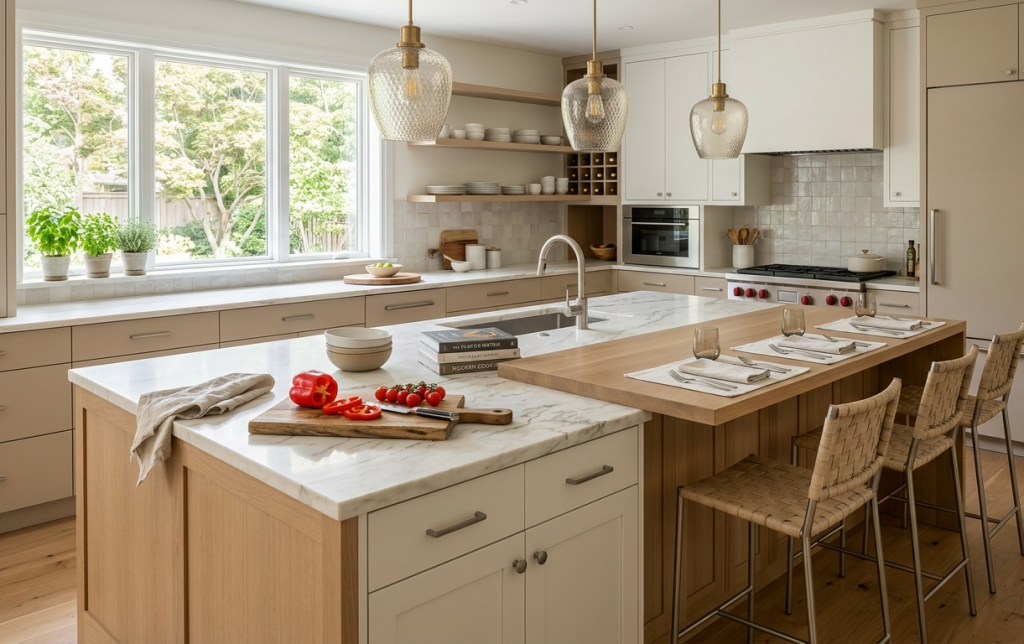
Before diving into materials and colors, it is essential to define how your family will use the space. Some people view a kitchen island with seating primarily as an extra prep station with the added benefit of a perch for a quick cup of coffee. Others envision it as the main dining area for the household. Your primary use case will dictate the height of the counter, the depth of the overhang, and the type of chairs or stools you select.
For a family-centric home, durability and accessibility are paramount. You might consider a multi-level design where one section is at a standard counter height for prep work, while a lower or higher section is dedicated to dining. This variety in a kitchen island with seating creates clear boundaries within a single piece of furniture, ensuring that flour from a baking project does not end up on a laptop during a study session. By tailoring the dimensions to your specific routine, you ensure the island becomes an asset rather than an obstacle.
Ergonomics and Spatial Planning
The success of a kitchen island with seating depends heavily on the surrounding clearances. To maintain a comfortable flow in the kitchen, you typically need at least 42 to 48 inches of aisle space between the island and the perimeter cabinets. This allows for drawers to open fully and for two people to pass each other without friction. You can refer to this standard kitchen island clearance guide to determine the exact walkway widths and seating depths required to ensure your layout remains functional for multiple cooks and guests simultaneously. When seating is added, you must also account for the “push-back” space of the stools.
A common mistake in DIY planning is failing to provide enough legroom. For a standard 36-inch high counter, a 12-inch overhang is usually the minimum for comfort, while 15 to 18 inches is preferred for long-term sitting. A thoughtfully engineered kitchen island with seating ensures that your knees are not hitting the cabinet doors and that the stools can be tucked away neatly when not in use. This level of detail is what separates a basic counter from a truly modern kitchen design that enhances the daily experience of the home.
Material Selection and Aesthetic Harmony
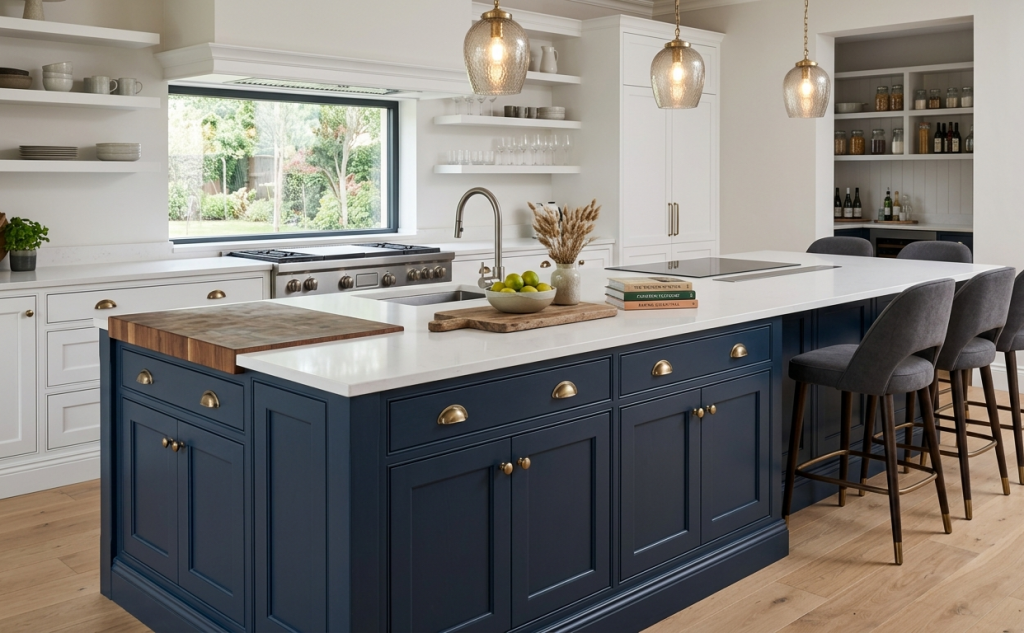
The materials you choose for your island can either make it blend in with your existing decor or stand out as a bold focal point. Many homeowners are moving away from matching the island exactly to the perimeter cabinets. Instead, they use a kitchen island with seating as an opportunity to introduce a contrasting wood stain or a vibrant paint color. For example, a navy blue island base paired with white perimeter cabinets creates a classic yet contemporary look.
Countertops play a huge role in the functionality of a kitchen island with seating. Quartz remains a favorite for its non-porous nature and resistance to staining, but butcher block inserts are gaining popularity for those who do a lot of heavy chopping. If your island includes a sink or a cooktop, the material needs to be even more resilient. Integrating these functional elements into a kitchen island with seating requires careful planning of plumbing and electrical lines, ensuring that the social side of the island remains uncluttered and inviting.
Storage Innovations and Custom Cabinetry
An island is often the best place to gain extra storage in a cramped kitchen. Beyond the standard cabinets, you can incorporate deep drawers for pots and pans, pull-out spice racks, or even a hidden microwave nook. When designing a custom kitchen cabinet in San Jose, the goal is to make every square inch count. By utilizing the back side of the island (the side where the stools are), you can create shallow cabinets for items that are used less frequently, such as holiday platters or large mixing bowls.
The craftsmanship involved in a high-quality kitchen island with seating shows in the details. Soft-close hinges, integrated charging stations for devices, and hidden LED strip lighting under the counter overhang can elevate the space. These features turn a simple block of cabinets into a high-tech command center. A well-planned kitchen island with seating not only looks beautiful but also solves common organizational problems, keeping your countertops clear and your kitchen running smoothly.
Lighting the Social Center
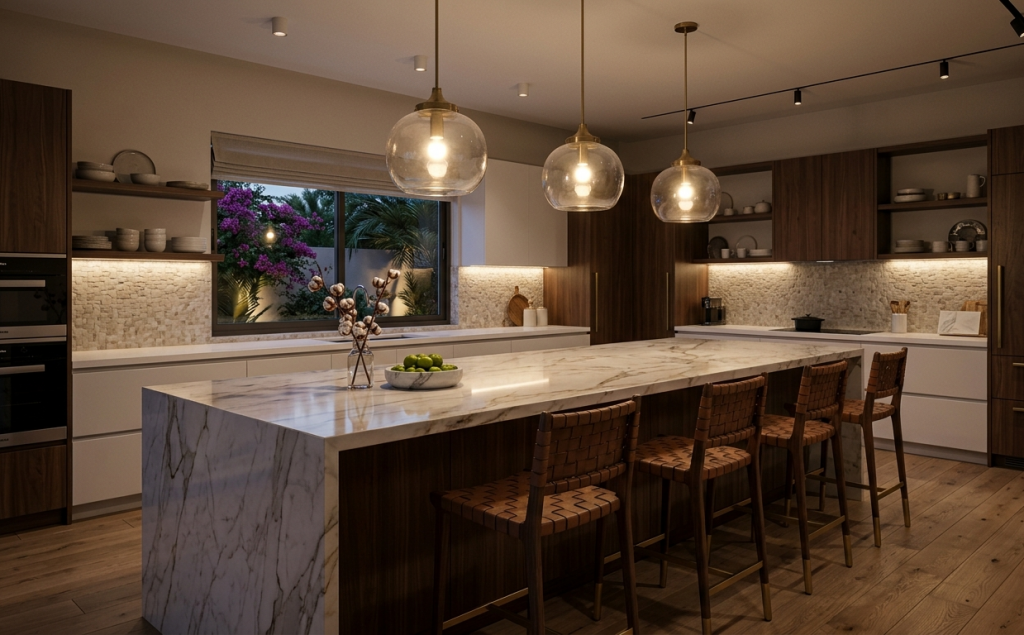
Lighting is the finishing touch that brings a kitchen island with seating to life. Pendant lights are the most popular choice, as they provide essential task lighting for the counter while acting as a piece of “jewelry” for the room. The rule of thumb is to hang pendants about 30 to 36 inches above the counter surface. You want them high enough to avoid blocking sightlines across the kitchen, but low enough to illuminate the surface effectively.
In addition to decorative pendants, consider dimmable lighting for your kitchen island with seating. This allows you to transition the mood from bright, focused light for meal prep to a warm, soft glow for evening entertaining. When the island is used for dining, the lighting should feel intimate and cozy. A perfectly lit kitchen island with seating becomes a natural magnet for guests, encouraging them to linger and enjoy the atmosphere of your home.
Integrating Appliances and Technology
Modern islands are becoming increasingly tech-savvy. It is now common to see wine fridges, dishwasher drawers, and even vacuum-sealed storage integrated into the base. For those who enjoy entertaining, a kitchen island with seating that features a built-in ice bucket or a small bar sink can be a game-changer. These additions allow the host to stay engaged with guests while serving drinks or preparing appetizers.
Connectivity is another major factor in 2026. Hidden pop-up outlets and wireless charging pads can be built directly into the countertop of a kitchen island with seating. This makes the island a viable place for remote work or for kids to charge their tablets while having a snack. The integration of these features must be handled with care to maintain the clean lines of modern kitchen cabinets, ensuring that cords and plugs do not distract from the overall design.
Multi-Level and Cantilevered Designs
For a truly unique look, some designers are experimenting with cantilevered countertops. This involves a thick slab of stone or wood that extends out without visible support legs, creating a floating effect. This architectural approach to a kitchen island with seating works exceptionally well in minimalist or industrial-style homes. It provides a clean, unobstructed space for legs and feet, giving the island a lighter, more airy feel despite its significant size.
Multi-level islands are another innovative solution. By having a higher “bar” section and a lower “work” section, you can effectively hide the inevitable mess of meal preparation from the view of people sitting in the living room. This staggered height in a kitchen island with seating also provides a more ergonomic experience for different activities. The lower level is ideal for kneading dough or rolling out pastry, while the higher level is perfect for leaning against during a conversation.
The Role of Color and Texture
Texture is becoming just as important as color in current kitchen trends. Reclaimed wood accents, fluted cabinet panels, and matte finishes are all being used to add tactile interest to a kitchen island with seating. A textured wood base can add warmth to a kitchen filled with cold stone and metal surfaces. Mixing textures, such as a smooth marble top with a rough-hewn oak base, creates a sophisticated and layered look.
Color can be used strategically to anchor the room. While white and gray remain popular, we are seeing more earthy tones like sage green, terracotta, and deep charcoal used for the kitchen island with seating. These colors feel grounded and timeless, providing a sense of comfort in the busiest part of the home. When the color of the island is chosen thoughtfully, it draws the eye and makes the kitchen island with seating feel like a piece of custom-built furniture rather than just another set of cabinets.
Seating Styles and Comfort
The stools or chairs you choose are just as important as the island itself. They need to be the correct height—usually 24 inches for a counter-height surface and 30 inches for a bar-height surface. Beyond height, consider the comfort of your guests. Stools with backs and footrests are much better for long conversations, while backless stools can be tucked completely under the counter of a kitchen island with seating to save space in smaller kitchens.
Fabric choices for seating should be practical. Performance fabrics that are resistant to spills and stains are a must in a kitchen environment. Leather or high-quality faux leather is also a great option for a kitchen island with seating, as it wipes clean easily and gains character over time. The style of the seating should complement the overall theme of the room, whether that is sleek mid-century modern or cozy farmhouse chic.
Future-Proofing Your Kitchen Layout
When investing in a major feature like a kitchen island with seating, it is wise to think about the long term. Choose high-quality materials and a layout that can adapt as your family grows or your needs change. A timeless design will always be in style, even as color trends come and go. Consider the resale value of your home; a functional and beautiful kitchen island with seating is one of the most sought-after features for potential buyers.
Think about how the island interacts with the rest of your home’s architecture. In an open-concept floor plan, the kitchen island with seating acts as the pivot point between the kitchen, dining, and living areas. It needs to look good from every angle. By focusing on quality craftsmanship and thoughtful spatial planning, you can create a kitchen island with seating that serves as the perfect foundation for your home’s social life for decades.
Conclusion
The evolution of the kitchen island with seating reflects our changing priorities as homeowners. We no longer want our kitchens to be isolated workspaces; we want them to be inclusive, social, and beautiful environments. By carefully considering ergonomics, materials, and storage, you can design an island that perfectly suits your unique lifestyle. Whether you prefer a sleek, minimalist block or a warm, wood-centered hub, the right kitchen island with seating will transform your kitchen into a modern masterpiece of form and function. It is the place where memories are made, one meal and one conversation at a time.
Frequently Asked Questions
How much space do I need for a kitchen island with seating?
You should aim for at least 36 to 42 inches of clearance around all sides of the island. For the seating area specifically, you need about 12 to 18 inches of knee room and enough space behind the stools for people to walk past while someone is sitting down.
What is the ideal height for an island with stools?
Standard counter height is 36 inches, which requires stools with a seat height of about 24 inches. If you prefer a bar-style feel, a 42-inch high counter requires stools with a seat height of 30 inches.
Can I put a cooktop on my kitchen island?
Yes, but it requires careful planning for ventilation. You will either need a ceiling-mounted range hood or a downdraft vent integrated into the cooktop. Make sure there is enough counter space on either side of the burners for safety.
Should the island match the rest of my cabinets?
It does not have to match. Many modern designs use a contrasting color or wood species for the island to make it stand out as a focal point. However, there should be some common element, like hardware or countertop material, to tie the look together.
How do I choose the right pendant lights for my island?
Choose pendants that are proportional to the size of the island. For a standard island, two or three lights are usually sufficient. They should be hung about 30 inches apart and 30 to 36 inches above the counter.
What is the best countertop material for an island?
Quartz is the most popular choice due to its durability and low maintenance. However, granite, marble, and wood are also excellent options depending on how much prep work you plan to do directly on the surface.