
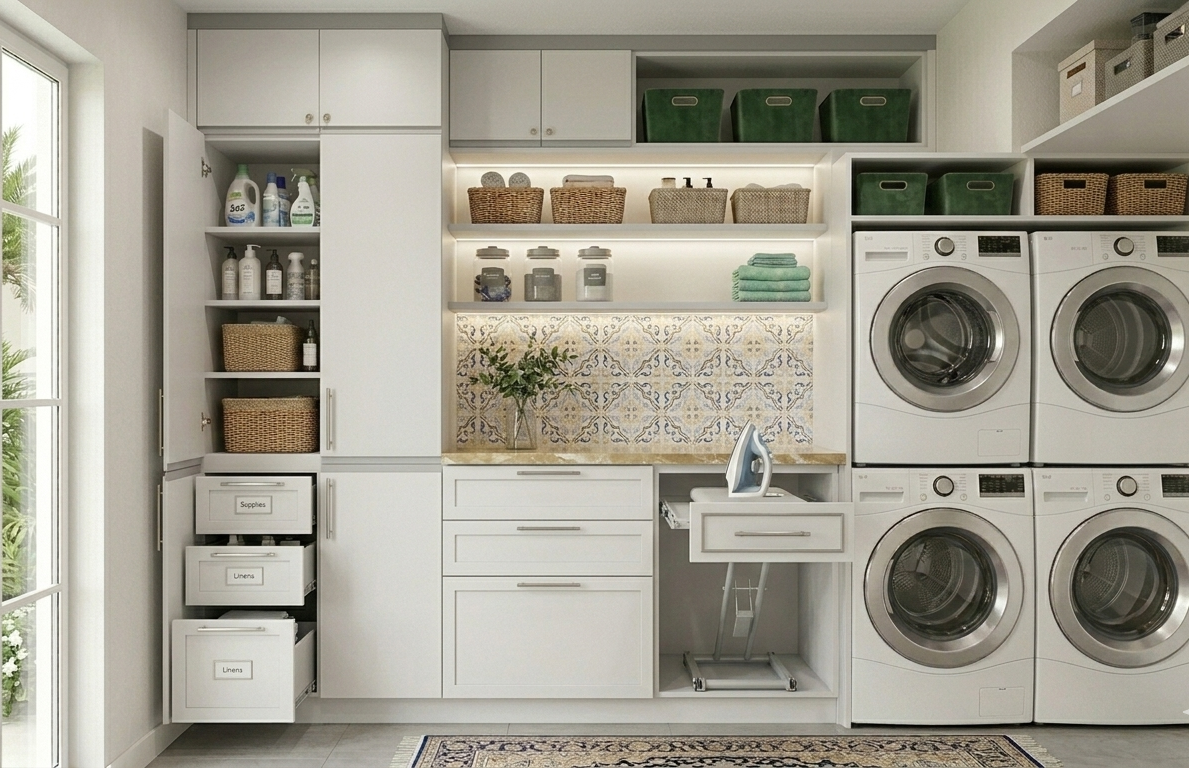

The laundry room is often the most overlooked space in a house, yet it handles some of the most consistent daily demands. For many homeowners, this room becomes a cluttered catch-all for detergents, cleaning supplies, and baskets of unsorted clothes. However, with the right approach to design, this functional area can become a model of efficiency and style. High-quality Laundry Room Cabinets are the cornerstone of this transformation, providing the structural organization needed to keep a busy household running smoothly. By moving beyond basic wire shelving and embracing custom cabinetry, you can create a workspace that actually makes chores feel less like a burden.
Modern home design increasingly focuses on the utility room as a multi-functional hub. It is no longer just a place for a washer and dryer; it is a mudroom, a pet washing station, and a secondary storage pantry. To meet these diverse needs, your Laundry Room Cabinets must be as versatile as they are durable. Choosing the right materials and layouts will ensure that your storage survives the high-humidity environment while providing enough “breathing room” for your daily tasks. In this guide, we will explore how to select, arrange, and optimize your cabinetry to build a laundry suite that balances form and function.
The Role of Custom Cabinetry in Small Spaces
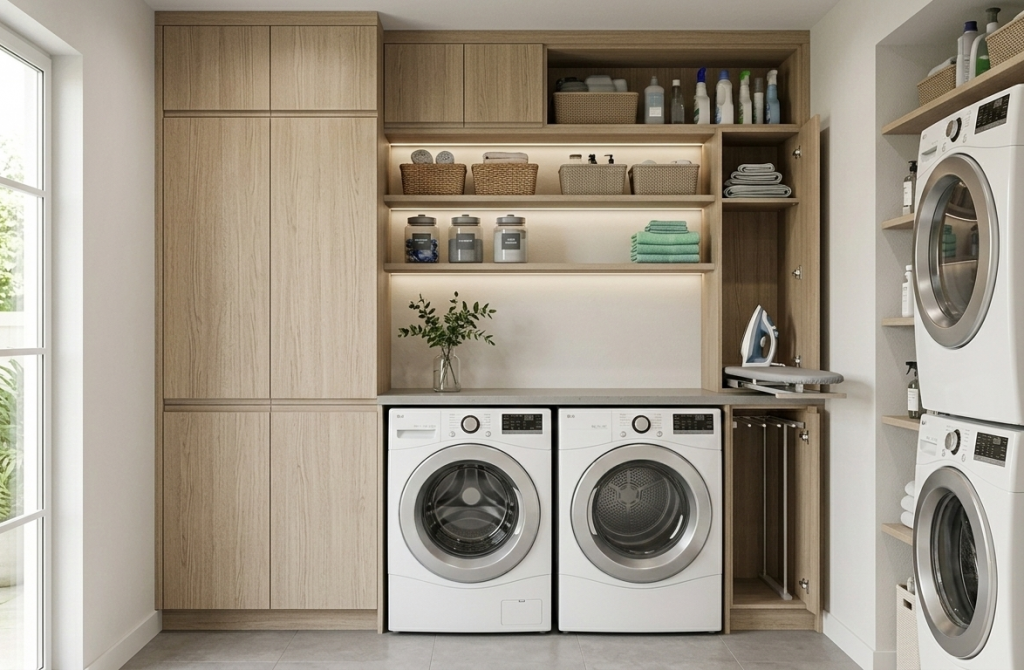
Most laundry rooms suffer from a lack of square footage. When space is at a premium, every inch of vertical and horizontal real estate matters. Standard, off-the-shelf options often leave awkward gaps or fail to utilize the full height of the ceiling. This is where custom Laundry Room Cabinets offer a distinct advantage. By tailoring the dimensions to your specific walls, you can eliminate “dead zones” and maximize your storage capacity.
Vertical storage is particularly effective in narrow rooms. Tall pantry-style units can house ironing boards, mops, and vacuum cleaners, keeping them tucked away but easily accessible. Upper cabinets positioned above the appliances provide a perfect spot for hazardous cleaning chemicals, keeping them out of reach of children and pets. When you invest in a custom closet in San Jose, you see how precision engineering changes a room; applying that same logic to the laundry area ensures that every detergent bottle has a designated home.
Material Selection for High-Moisture Areas
The environment of a laundry room is unique. Between the steam from the dryer and the potential for splashes from a utility sink, the air is often humid. Therefore, the materials used for your Laundry Room Cabinets must be resilient. While solid wood is beautiful, engineered woods like high-density moisture-resistant MDF or marine-grade plywood are often preferred for their stability in changing temperatures.
Finishes are equally important. A high-quality laminate or a durable polyurethane paint will provide a non-porous surface that is easy to wipe down. Because laundry rooms are prone to lint and dust, choosing a slab-style door or a simple Shaker design can make cleaning much easier compared to intricate moldings. If you are already looking for modern kitchen cabinets to update your home, consider using a similar aesthetic in the laundry room to create a cohesive look throughout your living space.
Optimizing the Layout for Workflow
A successful laundry room is built around a logical “work triangle” similar to a kitchen. You need a place to sort, a place to wash, and a place to fold. The placement of your Laundry Room Cabinets should facilitate this flow. For example, installing a deep countertop over front-loading machines creates a massive folding station that would otherwise be wasted space.
If your layout allows, incorporate a “folding zone” flanked by lower cabinets. For inspiration on the latest design trends and how to maximize every square inch for 2026, the laundry room design ideas guide offers excellent visual examples of efficient layouts. These lower units can hold pull-out hampers, separating whites, darks, and delicates before they ever hit the machine. This level of organization prevents the dreaded “pile on the floor” syndrome. Many homeowners find that integrating custom closet systems into the laundry design allows for specialized drying racks that fold flat against the wall when not in use, further saving valuable floor space.
Innovative Features for Modern Laundry Rooms
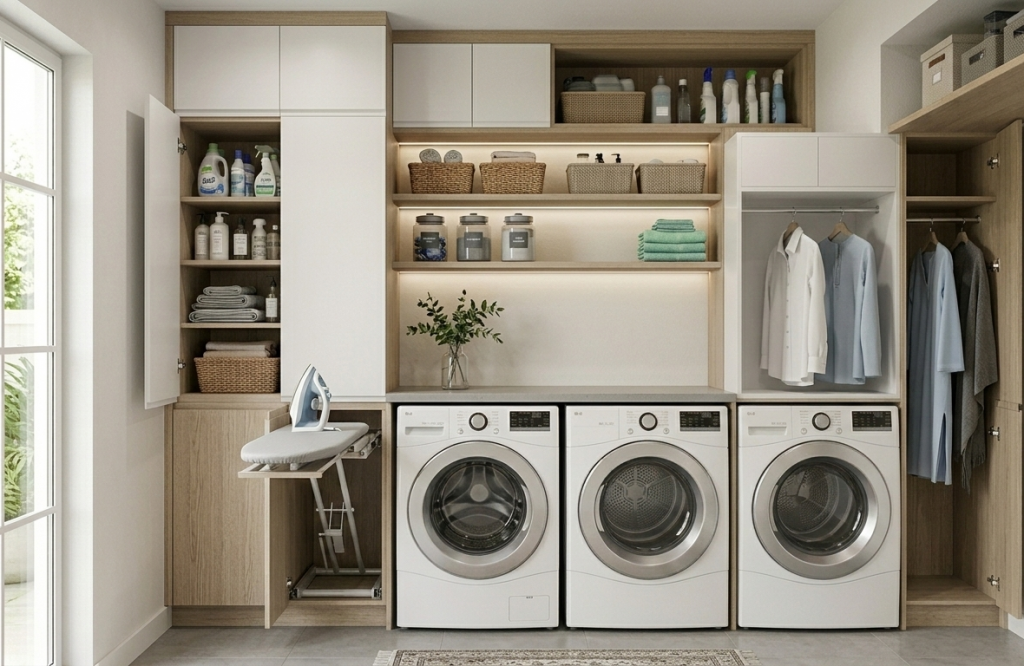
The best Laundry Room Cabinets go beyond simple boxes on a wall. Modern hardware allows for features that solve age-old problems. Consider adding a pull-out valet rod for hanging freshly steamed shirts or a built-in ironing board that slides out from a drawer. These small additions reduce the need for bulky, standalone equipment that often clutters the room.
Under-cabinet lighting is another game-changer. Often, laundry rooms are tucked into basements or windowless corners of the house. Bright LED task lighting mounted beneath your upper Laundry Room Cabinets ensures you can see stains clearly and helps in sorting socks accurately. Furthermore, soft-close hinges and drawer slides prevent the loud banging of doors in a room that is already filled with the hum of machinery.
Color and Style: Making Utility Beautiful
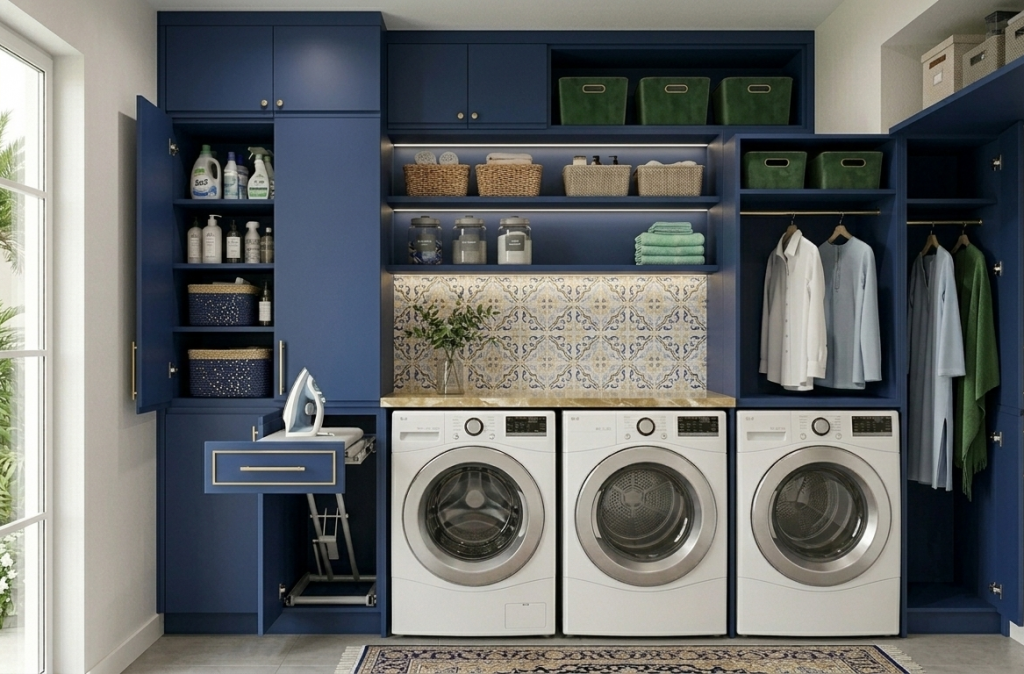
Just because a room is functional doesn’t mean it should be boring. In fact, because the laundry room is a smaller, separate space, it is a great place to experiment with bolder colors or textures. Navy blue or forest green Laundry Room Cabinets paired with gold hardware can create a sophisticated, high-end feel. Alternatively, crisp white cabinetry makes a small, dark room feel airy and clean.
Open shelving can also play a role in your design. While closed Laundry Room Cabinets are best for hiding messy supplies, a few open shelves can hold decorative baskets or frequently used items like wool dryer balls. This mix of open and closed storage adds visual interest and keeps the room from feeling too “boxy.” Using a backsplash of subway tile or a patterned stone can tie the cabinetry together and protect the walls from moisture.
Integrating the Mudroom and Laundry
In many modern floor plans, the laundry room serves as the primary entry point from the garage. This “transition zone” needs to handle dirty shoes, backpacks, and coats in addition to the wash. Extending your Laundry Room Cabinets to include a bench with cubbies or a row of hooks creates an organized mudroom.
By using the same cabinet faces and hardware for both the laundry storage and the mudroom lockers, you create a seamless transition. This integrated approach ensures that the “dumping ground” near the door doesn’t overflow into the laundry work area. Specialized Laundry Room Cabinets with ventilated doors are perfect for storing gym bags or wet shoes, allowing air to circulate and preventing odors.
The Value of Professional Design
While it might be tempting to pick up some pre-assembled boxes from a big-box store, the longevity and fit of professional Laundry Room Cabinets are worth the investment. A professional designer can help you navigate around plumbing stacks, electrical panels, and venting ducts that are often hidden in laundry room walls. They can also ensure that the weight of the cabinetry is properly supported, especially if you are storing heavy jugs of liquid detergent.
Custom-built Laundry Room Cabinets are designed to fit your appliances perfectly. If you decide to upgrade to a larger washer and dryer in the future, a custom layout can often be adjusted more easily than a modular set. This foresight protects your investment and ensures that your laundry room remains functional for decades to come.
Managing the Laundry Chaos
Even with the best storage, a laundry room requires a system. Use the interior of your Laundry Room Cabinets strategically. Place the items you use daily, like pods or liquid detergent, at eye level. Seasonal items, like curtain cleaners or heavy-duty stain removers, can go on the higher shelves. Clear acrylic bins inside the cabinets can keep small items like spare buttons or mesh wash bags from getting lost in the back.
Labels are a great addition to any cabinet system. When every family member knows exactly where the lint roller or the fabric softener lives, the room stays organized much longer. These small habits, supported by well-designed Laundry Room Cabinets, turn a chaotic chore into a streamlined process.
Transforming Your Home’s Efficiency
Upgrading your home with smart storage isn’t just about aesthetics; it is about reclaiming your time. When you don’t have to fight with a disorganized room, you finish your tasks faster. High-quality Laundry Room Cabinets provide the infrastructure for this efficiency. They turn a room that people used to hide behind a closed door into a space that adds real value to the home.
Whether you are looking to sell your home in the future or simply want to improve your daily life, the utility room is one of the best places to start. Well-executed Laundry Room Cabinets signal to guests and potential buyers that the home is meticulously maintained and thoughtfully designed. It is an investment in the “bones” of the house that pays dividends in daily convenience.
Conclusion
The evolution of the modern laundry room proves that utility and beauty can coexist. By focusing on durable materials, a logical layout, and custom-tailored Laundry Room Cabinets, you can create a space that meets the unique demands of your household. No longer a cramped corner for washing clothes, the laundry room can become a highly organized hub that simplifies your chores and enhances your home’s overall design. When every bottle, brush, and basket has a permanent home within your cabinetry, the stress of laundry day begins to disappear. Embrace the potential of your utility space and see how a few smart storage decisions can change your entire perspective on home organization.
Frequently Asked Questions
What is the best material for laundry room cabinets?
Because laundry rooms are prone to moisture, the best materials are those that resist warping. High-quality plywood or moisture-resistant MDF with a durable laminate or thermofoil finish are excellent choices. These materials provide a non-porous surface that handles humidity better than some solid woods.
Should I choose open or closed storage?
A combination of both is often ideal. Closed Laundry Room Cabinets are essential for hiding clutter and keeping cleaning chemicals safely out of sight. Open shelving is useful for items you reach for constantly or for displaying decorative elements that make the room feel more inviting.
How high should laundry room cabinets be installed?
Standard upper cabinets are usually installed about 18 to 20 inches above the countertop. However, if you have a top-loading washing machine, you need to ensure there is enough clearance to open the lid fully without hitting the bottom of the cabinetry.
Can I install cabinets over my washer and dryer?
Yes, and this is one of the best ways to save space. If you have front-loading machines, you can even install a continuous countertop over them to create a large folding surface, with the Laundry Room Cabinets mounted directly above.
How do I clean and maintain my cabinets?
Laundry room dust is often a mix of lint and detergent residue. Wipe your Laundry Room Cabinets down once a week with a damp microfiber cloth and a mild soap. Avoid harsh abrasives that could scratch the finish or break down the moisture-resistant seal.
What are some must-have features for small laundry rooms?
In a small space, look for “hidden” features like pull-out drying racks, a fold-down ironing board, and deep drawers for hampers. Utilizing the full vertical height of the room with tall Laundry Room Cabinets is also a key strategy for small-space organization.